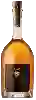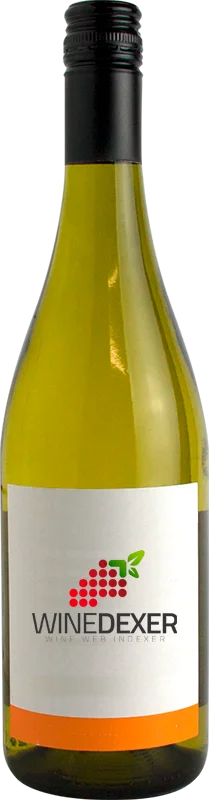
Bodegas BianchiMarló Dulce
 Sweet wine



This wine generally goes well with pork, vegetarian or rich fish (salmon, tuna etc).
Food and wine pairings with Marló Dulce
Pairings that work perfectly with Marló Dulce



Original food and wine pairings with Marló Dulce



The Marló Dulce of Bodegas Bianchi matches generally quite well with dishes of pork, rich fish (salmon, tuna etc) or shellfish such as recipes of potjevleesch, poached salmon in coconut milk with curry or penne with shrimp and zucchini.
Details and technical informations about Bodegas Bianchi's Marló Dulce.
Discover the grape variety: Caladoc
Caladoc noir is a grape variety that originated in France (Languedoc). It produces a variety of grape specially used for wine making. It is rare to find this grape to eat on our tables. This variety of grape is characterized by large bunches of grapes of medium size. Caladoc noir can be found in several vineyards: South-West, Cognac, Bordeaux, Languedoc & Roussillon, Provence & Corsica, Rhone Valley, Loire Valley, Savoie & Bugey, Beaujolais.
Last vintages of this wine
The best vintages of Marló Dulce from Bodegas Bianchi are 2017, 2020, 2018, 2016 and 0.
Informations about the Bodegas Bianchi
The Bodegas Bianchi is one of of the world's great estates. It offers 87 wines for sale in the of Mendoza to come and discover on site or to buy online.

The wine region of Mendoza
Mendoza is by far the largest wine region in Argentina. Located on a high-altitude plateau at the edge of the Andes Mountains, the province is responsible for roughly 70 percent of the country's annual wine production. The French Grape variety Malbec has its New World home in the vineyards of Mendoza, producing red wines of great concentration and intensity. The province Lies on the western edge of Argentina, across the Andes Mountains from Chile.
The word of the wine: Terroir
Strictly speaking, the notion of terroir corresponds to the geological characteristics of a vineyard. However, when we talk about terroir, we take into account the soil, the climate (even the microclimate), the flora, the fauna, and the human factor that characterizes the practices that make up the art of the craft.