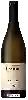
Winery Black TieSauvignon Blanc
 White wine


In the mouth this white wine is a with a nice freshness.
This wine generally goes well with vegetarian, shellfish or goat cheese.
Taste structure of the Sauvignon Blanc from the Winery Black Tie
Light | Bold | |
Dry | Sweet | |
Soft | Acidic |
In the mouth the Sauvignon Blanc of Winery Black Tie in the region of Western Cape is a with a nice freshness.
Food and wine pairings with Sauvignon Blanc
Pairings that work perfectly with Sauvignon Blanc



Original food and wine pairings with Sauvignon Blanc
The Sauvignon Blanc of Winery Black Tie matches generally quite well with dishes of shellfish, vegetarian or goat cheese such as recipes of mussels with rosemary and barbecue, broccoli and blue cheese quiche without pastry or customized tuna pie.
Details and technical informations about Winery Black Tie's Sauvignon Blanc.
Discover the grape variety: Palieri
This variety was obtained in 1958 in Velletri (Italy) by Michèle Palieri by crossing Alphonse Lavallée and molinera gorda or red malaga. Because of its great vigour, it is ideal for creating a trellis or a pergola. Little known in France, it can be found in Italy, Spain, Portugal, Morocco, etc.
Last vintages of this wine
The best vintages of Sauvignon Blanc from Winery Black Tie are 0
Informations about the Winery Black Tie
The Winery Black Tie is one of of the world's greatest estates. It offers 6 wines for sale in the of Western Cape to come and discover on site or to buy online.

The wine region of Western Cape
The Western Cape is home to the vast majority of the South African wine industry, and the country's two most famous wine regions, Stellenbosch and Paarl. The city of Cape Town serves as the epicenter of the Cape Winelands, a mountainous, biologically diverse area in the south-western corner of the African continent. A wide variety of wines are produced here. Wines from the Shiraz and Pinotage">Pinotage grape varieties can be fresh and juicy or Full-bodied and gutsy.
The word of the wine: Aging on lees
Maturing on the lees enhances the stability, aromatic complexity and texture of white wines, which gain in body and volume. This phenomenon is induced by autolysis, the process of self-degradation of the lees.