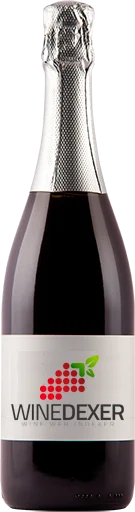
Winery BirmenstorferBlanc De Noir
 Sparkling wine
This wine generally goes well with
Details and technical informations about Winery Birmenstorfer's Blanc De Noir.
Discover the grape variety: Cabernet-Franc
Cabernet Franc is one of the oldest red grape varieties in Bordeaux. The Libourne region is its terroir where it develops best. The terroirs of Saint-Emilion and Fronsac allow it to mature and develop its best range of aromas. It is also the majority in many blends. The very famous Château Cheval Blanc, for example, uses 60% Cabernet Franc. The wines produced with Cabernet Franc are medium in colour with fine tannins and subtle aromas of small red fruits and spices. When blended with Merlot and Cabernet Sauvignon, it brings complexity and a bouquet of aromas to the wine. It produces fruity wines that can be drunk quite quickly but whose great vintages can be kept for a long time. It is an earlier grape variety than Cabernet-Sauvignon which means that it is also well planted further north, as far as the Loire Valley. In Anjou, it is also used to make sweet rosé wines. Cabernet Franc is now used in some twenty countries in Europe and throughout the world.
Informations about the Winery Birmenstorfer
The Winery Birmenstorfer is one of of the world's greatest estates. It offers 14 wines for sale in the of Aargau to come and discover on site or to buy online.

The wine region of Aargau
Aargau is a canton and wine appellation in the Center of Northern Switzerland, located immediately west of Zurich and Southeast of Basel. Its northern border traces the Rhine river, which separates it from the southern German region of Baden; this close connection is evident in the Germanic style of many Aargau wines. To confuse matters slightly, the canton's main concentration of Vineyards centers around a town named Baden at its eastern edge. Aargau produces mostly red wines, in keeping with the trends of other cantons in the German-speaking north of Switzerland.
The word of the wine: Maceration
Prolonged contact and exchange between the juice and the grape solids, especially the skin. Not to be confused with the time of fermentation, which follows maceration. The juice becomes loaded with colouring matter and tannins, and acquires aromas. For a rosé, the maceration is short so that the colour does not "rise" too much. For white wines too, a "pellicular maceration" can be practised, which allows the wine to acquire more fat.