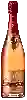
Winery Bernard BronnerCrémant d'Alsace Brut
 Sparkling wine



In the mouth this sparkling wine is a powerful with a nice vivacity and a fine and pleasant bubble.
This wine generally goes well with poultry, appetizers and snacks or lean fish.

Taste structure of the Crémant d'Alsace Brut from the Winery Bernard Bronner
Light | Bold | |
Soft | Acidic | |
Gentle | Fizzy |
In the mouth the Crémant d'Alsace Brut of Winery Bernard Bronner in the region of Alsace is a powerful with a nice vivacity and a fine and pleasant bubble.
Food and wine pairings with Crémant d'Alsace Brut
Pairings that work perfectly with Crémant d'Alsace Brut



Original food and wine pairings with Crémant d'Alsace Brut


The Crémant d'Alsace Brut of Winery Bernard Bronner matches generally quite well with dishes of shellfish, poultry or appetizers and snacks such as recipes of chinese noodles with shrimp, chicken legs and changing or fried onions.
Details and technical informations about Winery Bernard Bronner's Crémant d'Alsace Brut.
Discover the grape variety: Prieto Picudo Tinto
Intensely coloured, fresh reds with a deep purple robe, firm tannins and a taut palate with marked acidity. Signature aromas of black fruits (blackberry, blackcurrant), spice, violet and floral notes. A distinctive, identity-driven variety. Star of the Tierra de León DO, it excels as a single variety, producing unique reds from Castile-León. A native black grape of Spain's León province in Castile-León.
Informations about the Winery Bernard Bronner
The Winery Bernard Bronner is one of of the world's greatest estates. It offers 13 wines for sale in the of Crémant d'Alsace to come and discover on site or to buy online.

The wine region of Crémant d'Alsace
France's best-selling sparkling wine after Champagne. Fine traditional-method bubbles (min. 9 months on lees), fresh and fruity with signature notes of green apple, pear, white flowers and almond, a taut finish. Dominant Pinot Blanc (roundness, supple base), ample Pinot Auxerrois, mineral Riesling and taut Chardonnay.
The wine region of Alsace
Capital of great French aromatic whites, most often dry and single-varietal. Straight, mineral Riesling (lemon, gunflint), opulent, exuberant Gewurztraminer (lychee, rose, spices), round, smoky Pinot Gris, floral, crisp Muscat, supple Pinot Blanc. Fine, fruity Crémants d'Alsace, exceptional sweet Vendanges Tardives and Sélection de Grains Nobles. 15,500 ha at the foot of the Vosges on varied soils, 51 Grands Crus since 1975.
The word of the wine: Dosing liqueur (champagne)
Also known as liqueur d'expédition, a solution made up of wine and sugar added to champagne after disgorgement and which determines the type of wine: extra-brut, brut, extra-dry, dry, demi-sec.