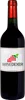
Winery Bella AuroraVinho Tinto de Mesa Suave Bordô
 Red wine


This wine generally goes well with
Details and technical informations about Winery Bella Aurora's Vinho Tinto de Mesa Suave Bordô.
Discover the grape variety: Salagnin
Discovered in the 1870s by Mr. Robin, who lived in the Drôme at the time in Lapeyrouse-Mornay, this ancient grape variety is believed to have originated in the north of Isère. It can also be found in Switzerland. According to Thierry Lacombe (I.N.R.A./Montpellier), it is the result of a natural intraspecific crossing between Tressot Noir and Mondeuse Blanche. It should be noted in passing that, on the one hand, it has exactly the same parents as the mondeuse noire, that on the other hand, it is the mother of the diolinoir and, finally, is related to the servanin. Robin noir is not widely propagated today because it is not well known, although it is listed in the Official Catalogue of Wine Grape Varieties, list A1.
Last vintages of this wine
The best vintages of Vinho Tinto de Mesa Suave Bordô from Winery Bella Aurora are 0
Informations about the Winery Bella Aurora
The Winery Bella Aurora is one of of the world's greatest estates. It offers 9 wines for sale in the of Sao Paulo to come and discover on site or to buy online.

The wine region of Sao Paulo
Brazil is the largest country in South America and the fifth-largest in the world. It has a sizable wine industry, but is probably best known in global markets for spirits, and in particular Cachaça. With roughly 83,000 hectares (205,000 acres) of Vineyard">Vineyard, it ranks just behind its near-neighbors Argentina and Chile in terms of acreage under vine. Only a small proportion (about 10 percent) of these acres are planted with Vitis vinifera vines, however this large acreage does not translate into large volumes of quality wine.
The word of the wine: Draft liquor (champagne)
After blending, the wine is bottled with a liqueur de tirage (a mixture of sugar and wine) and a yeast (selected yeasts). The yeast attacks the sugar and creates carbon dioxide. The fermentation, which lasts about two months, is prolonged by an ageing period (15 months minimum in total). The bottle is capped (some rare vintages are capped with a staple and a cork).