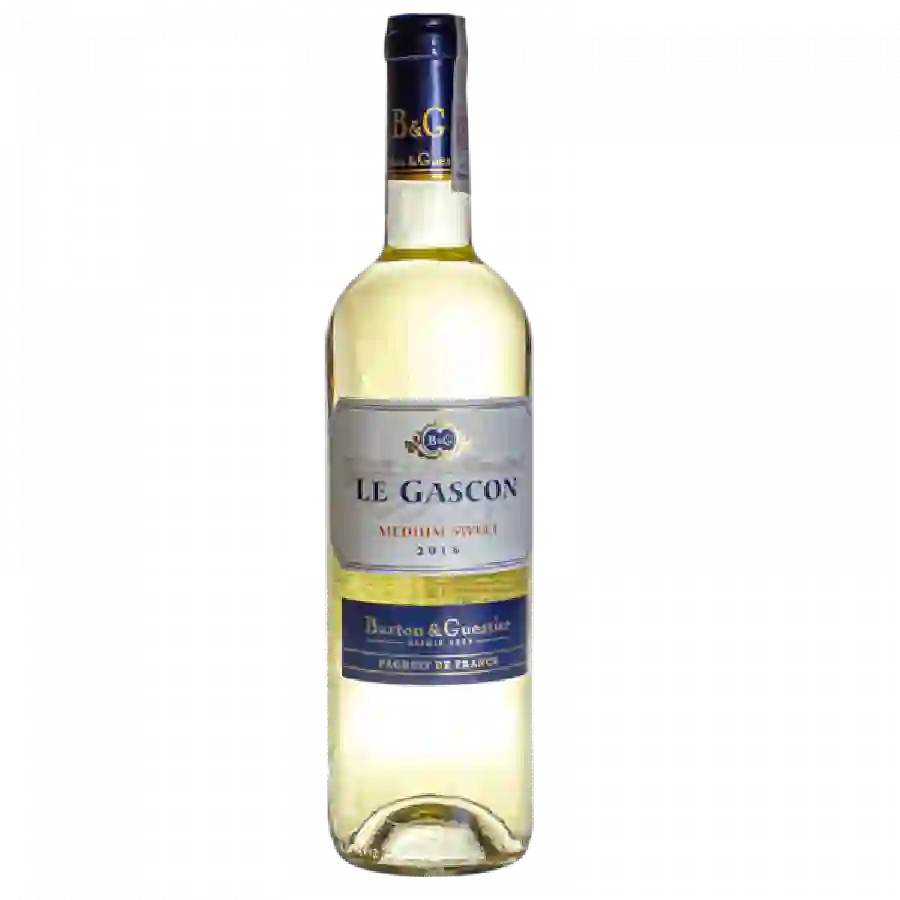
Winery Barton & GuestierLe Gascon Medium Sweet
 Red wine



This wine generally goes well with

Details and technical informations about Winery Barton & Guestier's Le Gascon Medium Sweet.
Discover the grape variety: Léon Millot
Coloured, fruity reds with a dense purple robe, supple tannins and fresh acidity, showing aromas of black cherry, blackberry, plum, blackcurrant, sweet spices and earthy, slightly foxy notes. Round palate, best drunk young. Very cold- and disease-resistant interspecific variety, driving northern vineyards: Canada (Quebec, Ontario, Nova Scotia), the US North-East and England. Hybrid created in 1911 by Eugène Kuhlmann in Alsace, full sibling of maréchal foch.
Last vintages of this wine
The best vintages of Le Gascon Medium Sweet from Winery Barton & Guestier are 2017, 2018
Informations about the Winery Barton & Guestier
The Winery Barton & Guestier is one of of the world's great estates. It offers 147 wines for sale in the of Vin de Pays to come and discover on site or to buy online.

The wine region of Vin de Pays
Intermediate category between AOC and Vin de France (renamed IGP in 2009), 27% of national volume. Accessible, expressive wines defined by their grape: opulent Chardonnay, lively Sauvignon, round Merlot, peppery Syrah, floral Viognier with apricot. 76 IGP in France at 3 scales: regional (Pays d'Oc, Méditerranée, Val de Loire), departmental or local. Flexible rules, wide range of permitted grapes, free grape and vintage labelling.
The wine region of Pays d'Oc
The single-grape IGP par excellence: modern, accessible, frank and fruity wines, the popular signature of the Midi. Spicy Syrah reds (pepper, blackberry), round Merlot, structured Cabernet, generous Grenache, supple Cinsault. Crisp, tangy rosés. Opulent Chardonnay whites, lively Sauvignon, floral, apricoty Viognier.
The word of the wine: Reassembly
During the vinification process, a "cap" is formed at the top of the vats with the solid parts (skin, pulp, pips, etc.), which contain tannins and colouring elements. Pumping over consists of emptying the vat from the bottom and pouring the juice back to the top, in order to mix the cap and the juice and to favour the exchange and the extraction. This old technique allows a better exchange between the solid parts and the liquid.