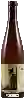
Winery Baldauf RamsthalClees Grauer Burgunder Spätlese Trocken
 White wine


In the mouth this white wine is a powerful.
This wine generally goes well with pork, cured meat or mushrooms.
Taste structure of the Clees Grauer Burgunder Spätlese Trocken from the Winery Baldauf Ramsthal
Light | Bold | |
Dry | Sweet | |
Soft | Acidic |
In the mouth the Clees Grauer Burgunder Spätlese Trocken of Winery Baldauf Ramsthal in the region of Franken is a powerful.
Food and wine pairings with Clees Grauer Burgunder Spätlese Trocken
Pairings that work perfectly with Clees Grauer Burgunder Spätlese Trocken



Original food and wine pairings with Clees Grauer Burgunder Spätlese Trocken

The Clees Grauer Burgunder Spätlese Trocken of Winery Baldauf Ramsthal matches generally quite well with dishes of pork, spicy food or mushrooms such as recipes of stuffed pumpkin, mullet with onions and white wine or blanquette of veal in the old way (self-cooker).
Details and technical informations about Winery Baldauf Ramsthal's Clees Grauer Burgunder Spätlese Trocken.
Discover the grape variety: Servanin
Servanin is native to the south of Savoie and the north of Isère. Its berries are short, oval and small to medium-sized. The bunches are full, cylindrical and small, some of them winged, and the bluish-black colour at the beginning turns to dark black when the grapes reach full maturity. Then, as time goes by, small green berries are gradually added to the vine. This curtain is completed by the light green of the medium-sized leaves.servanin is fertile and robust. Its only weak points are millerandage, citadels and mildew. It is less susceptible to grey rot. Although it buds early, it ripens rather late, in the second half of the year. This liqueur, which belongs to the Vin-de-Savoie, has a medium alcoholic and somewhat acidic taste. This wine is also called martelet, servagnin or serene. Unfortunately, it is noted that this variety has nowadays practically disappeared.
Last vintages of this wine
The best vintages of Clees Grauer Burgunder Spätlese Trocken from Winery Baldauf Ramsthal are 0
Informations about the Winery Baldauf Ramsthal
The Winery Baldauf Ramsthal is one of of the world's great estates. It offers 63 wines for sale in the of Franken to come and discover on site or to buy online.

The wine region of Franken
Franken, or Franconia in English, is a wine-growing region in the northwest of Germany's historic state of Bavaria. Though Bavaria may be more famous for its beer, Franken boasts a proud viticultural tradition and is one of the most unique regions in the country. There are just over 6,100 hectares (15,073 ac) of vines Planted in Franken and around 80 percent of these are white Grape varieties. Here, Riesling plays second fiddle to the often overlooked Silvaner and Müller-Thurgau.
The word of the wine: Cooked wine
In Provence, wine made from must cooked and reduced over a wood fire, traditionally consumed at Christmas time with the thirteen desserts.