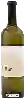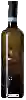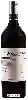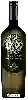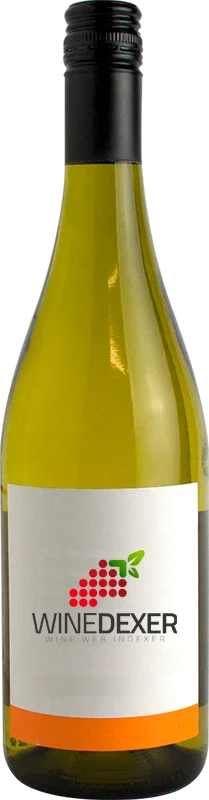
Winery BaccantiFalanghina
 White wine


In the mouth this white wine is a powerful.
This wine generally goes well with vegetarian, appetizers and snacks or shellfish.
Taste structure of the Falanghina from the Winery Baccanti
Light | Bold | |
Dry | Sweet | |
Soft | Acidic |
In the mouth the Falanghina of Winery Baccanti in the region of Campania is a powerful.
Food and wine pairings with Falanghina
Pairings that work perfectly with Falanghina



Original food and wine pairings with Falanghina
The Falanghina of Winery Baccanti matches generally quite well with dishes of shellfish, vegetarian or appetizers and snacks such as recipes of chicken and shrimp jambalaya, spinach and goat cheese quiche or basil and cherry tomato clafoutis.
Details and technical informations about Winery Baccanti's Falanghina.
Discover the grape variety: Calitor
Calitor is a black grape variety of Provençal origin that is not widely grown in France. It is only cultivated on a little more than a hundred hectares in total. The main characteristic of this variety is its bent stalk. Its adult leaves have 5 lobes and angular teeth. The leaf blade is both pubescent and downy. The young leaves have a pinkish tinge, especially in autumn. They are also downy. The tip of the calitor branch is cottony. Calitor is a recommended grape variety in the departments of Vaucluse and Var and is authorized in others such as Gard, Drôme and Ardèche. It has two variants, namely the grey calitor and the white calitor. The calitor is matured only 35 days after the chasselas but it is very productive. It appreciates hot and dry soils. This variety is resistant to oidium, but it remains sensitive to grey rot and mildew. Calitor produces a light, low-alcohol wine with little colour.
Last vintages of this wine
The best vintages of Falanghina from Winery Baccanti are 0
Informations about the Winery Baccanti
The Winery Baccanti is one of of the world's great estates. It offers 14 wines for sale in the of Campania to come and discover on site or to buy online.

The wine region of Campania
Campania is a region that forms the "tibia" of the boot of Italy, and whose largest city is Naples. Its name comes from Campania felix, a Latin phrase meaning roughly "happy land". The region has strong historical links with wine and vineyards, dating back to the 12th century BC, and is one of the oldest wine regions in Italy. The considerable influence of ancient empires, including the Greeks, Romans and Byzantines, means that some of the varieties in this region are linked to historical legends.
The word of the wine: Chaptalization
The addition of sugar at the time of fermentation of the must, an ancient practice, but theorized by Jean-Antoine Chaptal at the dawn of the 19th century. The sugar is transformed into alcohol and allows the natural degree of the wine to be raised in a weak or cold year, or - more questionably - when the winegrower has a harvest that is too large to obtain good maturity.