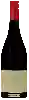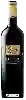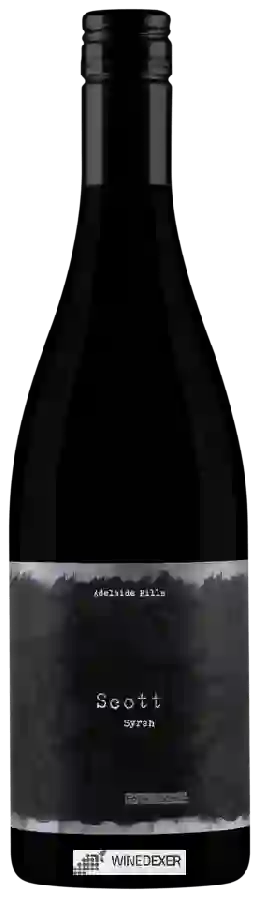
Winery ScottHope Forest Syrah
 Red wine


In the mouth this red wine is a powerful with a lot of tannins present in the mouth.
This wine generally goes well with poultry, beef or game (deer, venison).

Taste structure of the Hope Forest Syrah from the Winery Scott
Light | Bold | |
Smooth | Tannic | |
Dry | Sweet | |
Soft | Acidic |
In the mouth the Hope Forest Syrah of Winery Scott in the region of California is a powerful with a lot of tannins present in the mouth.
Wine flavors and olphactive analysis


On the nose the Hope Forest Syrah of Winery Scott in the region of California often reveals types of flavors of earth.
Food and wine pairings with Hope Forest Syrah
Pairings that work perfectly with Hope Forest Syrah



Original food and wine pairings with Hope Forest Syrah

The Hope Forest Syrah of Winery Scott matches generally quite well with dishes of beef, lamb or game (deer, venison) such as recipes of pork shoulder with mustard, steamed lamb shoulder with cumin and coriander or duck breast with apples.
Details and technical informations about Winery Scott's Hope Forest Syrah.
Discover the grape variety: Servanin
Supple, fruity reds with a light color, pale ruby robe, smooth tannins and an airy palate with preserved acidity, showing red fruit aromas (cherry, raspberry) and mild alpine spices. Discreet alpine profile. Preserved for its heritage value, it survives in a few heritage alpine plots and belongs to the ancient varieties of the French Alps under study. Black French autochtone variety from Dauphiné and Savoie.
Last vintages of this wine

The best vintages of Hope Forest Syrah from Winery Scott are 0, 2015
Informations about the Winery Scott
The Winery Scott is one of of the world's greatest estates. It offers 7 wines for sale in the of Central Coast to come and discover on site or to buy online.

The wine region of Central Coast
Vast Californian coast (450 km) cooled by Pacific fogs. Cradle of great coastal Pinots and Chardonnays: fine silky Pinot Noir (cherry, raspberry, undergrowth) on Sta. Rita Hills, Santa Maria and Santa Lucia Highlands; ample taut Chardonnay, yellow fruit and saline minerality. Also spicy peppery Syrah, structured Cabernet and jammy Zinfandel on Paso Robles.
The wine region of California
Powerful, sunny reds: dense Napa Cabernet Sauvignon (blackcurrant, chocolate, tobacco, ample tannins), spicy, jammy Zinfandel from the Sierra Foothills, silky red-fruited Pinot Noir on the cool coast (Sonoma, Russian River, Central Coast). Opulent, buttery Chardonnay, notes of yellow fruit and vanilla. Varied climate, from the hot interior to the Pacific-cooled coast. 80% of US production, 139 AVAs including Napa (1st AVA, 1981).
The word of the wine: Effervescent
Any wine loaded with CO2 (carbon dioxide), which is revealed in the form of bubbles, reinforcing the freshness effect in the mouth. This gas production is the result of what is called the second fermentation in the bottle. It occurs in champagnes and sparkling wines such as crémants.