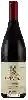
Winery Hautes TerresCoteaux Du Tricastin
 Red wine
This wine generally goes well with beef, game (deer, venison) or lamb.
Food and wine pairings with Coteaux Du Tricastin
Pairings that work perfectly with Coteaux Du Tricastin



Original food and wine pairings with Coteaux Du Tricastin
The Coteaux Du Tricastin of Winery Hautes Terres matches generally quite well with dishes of beef, lamb or game (deer, venison) such as recipes of boeuf en daube, saddle of lamb with herbs or duck with vanilla (reunion island).
Details and technical informations about Winery Hautes Terres's Coteaux Du Tricastin.
Discover the grape variety: Goldriesling
Goldriesling blanc is a grape variety that originated in France (Alsace). It produces a variety of grape specially used for wine making. It is rare to find this grape to eat on our tables. This variety of grape is characterized by small bunches and small grapes. The white Goldriesling can be found cultivated in these vineyards: South West, Cognac, Bordeaux, Provence & Corsica, Rhone Valley.
Informations about the Winery Hautes Terres
The Winery Hautes Terres is one of of the world's greatest estates. It offers 9 wines for sale in the of Rhône méridional to come and discover on site or to buy online.

The wine region of Rhône méridional
Côtes du Rhône is a regional appellation in the Rhône Valley in eastern France. It applies to red, rosé and white wines, and includes more than 170 villages. The area follows the course of the Rhône southward for 125 miles (200 km) from Saint-Cyr-sur-le-Rhône to Avignon. A small portion of the wines in the appellation are white wines.
The wine region of Rhone Valley
The Rhone Valley is a key wine-producing region in Southeastern France. It follows the North-south course of the Rhône for nearly 240 km, from Lyon to the Rhône delta (Bouches-du-Rhône), near the Mediterranean coast. The Length of the valley means that Rhône wines are the product of a wide variety of soil types and mesoclimates. The viticultural areas of the region cover such a distance that there is a widely accepted division between its northern and southern parts.
The word of the wine: Oenologist
Specialist in wine-making techniques. It is a profession and not a passion: one can be an oenophile without being an oenologist (and the opposite too!). Formerly attached to the Faculty of Pharmacy, oenology studies have become independent and have their own university course. Learning to make wine requires a good chemical background but also, increasingly, a good knowledge of the plant. Some oenologists work in laboratories (analysis). Others, the consulting oenologists, work directly in the properties.