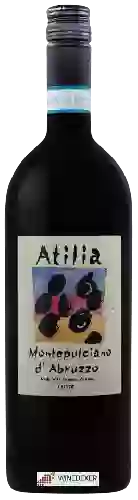
The Winery Atilia of Montepulciano d'Abruzzo of Abruzzo

The Winery Atilia is one of the best wineries to follow in Montepulciano d'Abruzzo.. It offers 2 wines for sale in of Montepulciano d'Abruzzo to come and discover on site or to buy online.
Looking for the best Winery Atilia wines in Montepulciano d'Abruzzo among all the wines in the region? Check out our tops of the best red, white or effervescent Winery Atilia wines. Also find some food and wine pairings that may be suitable with the wines from this area. Learn more about the region and the Winery Atilia wines with technical and enological descriptions.
How Winery Atilia wines pair with each other generally quite well with dishes of beef, pasta or veal such as recipes of roast beef with garlic, pork filet mignon with foie gras and rosemary or alsatian fondue.
On the nose the red wine of Winery Atilia. often reveals types of flavors of non oak, earth or oak and sometimes also flavors of spices, red fruit or black fruit.
The wine region of Montepulciano d'Abruzzo is located in the region of Abruzzes of Italy. We currently count 1280 estates and châteaux in the of Montepulciano d'Abruzzo, producing 2020 different wines in conventional, organic and biodynamic agriculture. The wines of Montepulciano d'Abruzzo go well with generally quite well with dishes .
How Winery Atilia wines pair with each other generally quite well with dishes of pasta, vegetarian or appetizers and snacks such as recipes of mascarpone pasta with tomato sauce, goat cheese and bacon quiche or happy new year bites.
In the mouth the white wine of Winery Atilia. is a with a nice freshness.
Planning a wine route in the of Montepulciano d'Abruzzo? Here are the wineries to visit and the winemakers to meet during your trip in search of wines similar to Winery Atilia.
A very old grape variety, most likely originating in Italy, now cultivated mainly in the central and central-eastern parts of this country, registered in France in the Official Catalogue of wine grape varieties, list A1. Montepulciano has long been confused with sangiovese or nielluccio, an A.D.N. analysis has shown that it is different.