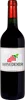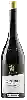
Winery Alois LagederCasòn Hirschprunn Corolle
 Red wine



In the mouth this red wine is a powerful.
This wine generally goes well with beef, game (deer, venison) or lamb.
Taste structure of the Casòn Hirschprunn Corolle from the Winery Alois Lageder
Light | Bold | |
Smooth | Tannic | |
Dry | Sweet | |
Soft | Acidic |
In the mouth the Casòn Hirschprunn Corolle of Winery Alois Lageder in the region of Trentino-Alto-Adige is a powerful.
Food and wine pairings with Casòn Hirschprunn Corolle
Pairings that work perfectly with Casòn Hirschprunn Corolle



Original food and wine pairings with Casòn Hirschprunn Corolle

The Casòn Hirschprunn Corolle of Winery Alois Lageder matches generally quite well with dishes of beef, pasta or lamb such as recipes of tournedos with foie gras, chinese noodles with shrimp or lamb in spicy sauce.
Details and technical informations about Winery Alois Lageder's Casòn Hirschprunn Corolle.
Discover the grape variety: Ravat noir
Obtained by Jean-François Ravat, it is an interspecific cross between 8365 Seibel and pinot noir. In France, this direct-producing hybrid has been little multiplied.
Last vintages of this wine
The best vintages of Casòn Hirschprunn Corolle from Winery Alois Lageder are 0
Informations about the Winery Alois Lageder
The Winery Alois Lageder is one of of the world's great estates. It offers 105 wines for sale in the of Trentino-Alto-Adige to come and discover on site or to buy online.

The wine region of Trentino-Alto-Adige
Trentino-Alto Adige is Italy's northernmost wine region, located right on the border with Austria. Production was once dominated by the local red varieties Lagrein and Schiava. Now white wines are becoming more important in terms of Volume. Increasingly, they are made from internationally renowned Grape varieties such as Pinot Grigio and Chardonnay.
The word of the wine: Yeast
Micro-organisms at the base of all fermentative processes. A wide variety of yeasts live and thrive naturally in the vineyard, provided that treatments do not destroy them. Unfortunately, their replacement by laboratory-selected yeasts is often the order of the day and contributes to the standardization of the wine. Yeasts are indeed involved in the development of certain aromas.