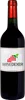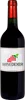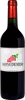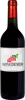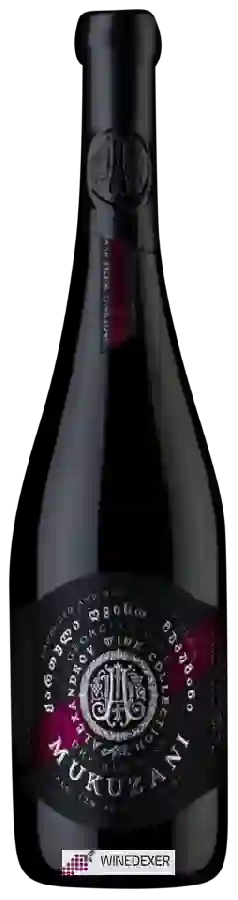
Winery Alexandrov Wine CollectionMukuzani
 Red wine



This wine generally goes well with

Wine flavors and olphactive analysis



On the nose the Mukuzani of Winery Alexandrov Wine Collection in the region of Kakheti often reveals types of flavors of non oak, oak or black fruit.
Discover the grape variety: Saperavi
Deeply coloured, powerful reds with inky robe (teinturier grape with red flesh) and tight tannins, with intense aromas of blackberry, blackcurrant, black plum, spices, leather and balsamic notes. High acidity and fine ageing potential. Often made by the ancestral qvevri method (buried clay jar), it signs the great Georgian reds of Kakheti (Mukuzani, Kvareli, Napareuli). Also in Russia, Ukraine and Australia. Ancient Georgian variety.
Last vintages of this wine
The best vintages of Mukuzani from Winery Alexandrov Wine Collection are 2016, 2014, 2018, 0
Informations about the Winery Alexandrov Wine Collection
The Winery Alexandrov Wine Collection is one of of the world's greatest estates. It offers 7 wines for sale in the of Mukuzani to come and discover on site or to buy online.

The wine region of Mukuzani
Georgian micro-AOC in Kakheti at the Caucasus foothills, clay-limestone soils. Saperavi monovarietal signature (native teinturier with red pulp, 5-6 millennia in Kakheti). Signature full-bodied deep reds with notes of black candied cherry, blackberry, plum, ink, leather, tobacco, dried herbs and a balsamic oaky touch, firm tannins and dense palate — dark robe, minimum 3-year oak ageing, long-keeping. Venerable Caucasus gastronomic wine.
The wine region of Kakheti
Cradle of amber and orange wines, vinified in qvevri (buried clay jars, UNESCO). Skin-macerated Rkatsiteli whites: signature notes of dried apricot, walnut, honey, orange peel and black tea, fine tannins and controlled oxidation. Deep, tinctorial Saperavi reds with black fruit, plum, spice and firm tannins, age-worthy. Also Mtsvane and Kisi in white, fresh and floral.
The word of the wine: Ancestral method
A method of making certain sparkling wines such as blanquette de Limoux, sparkling gaillac or clairette de Die, which consists of a second fermentation in the bottle based on natural sugars and yeasts naturally brought by the grapes (unlike the méthode champenoise, which requires the addition of tirage liquor).