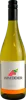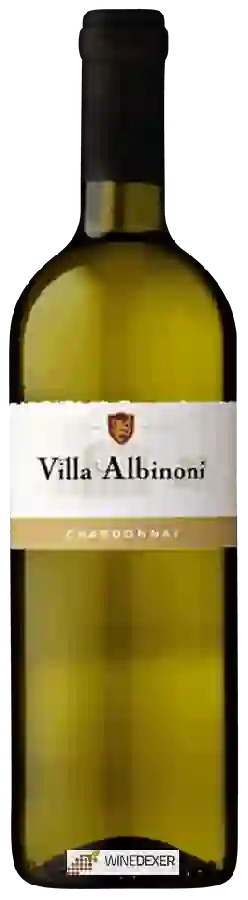
Winery AlbinoniChardonnay
 wine
wine
This wine generally goes well with
The Chardonnay of the Winery Albinoni is in the top 0 of wines of Veneto.
Details and technical informations about Winery Albinoni's Chardonnay.
Discover the grape variety: Pinotage
An intraspecific cross between pinot noir and cinsaut called hermitage, obtained in South Africa in 1925 by Professor Abraham Izak Perold. Since then, it has been propagated in Africa, New Zealand, Australia, the United States (California), Canada, Brazil, Israel, etc. In France, it is practically unknown, although it is registered in the Official Catalogue of Vine Varieties on the A1 list. - Synonymy: none to date (for all the synonyms of the varieties, click here!).
Informations about the Winery Albinoni
The Winery Albinoni is one of of the world's great estates. It offers 15 wines for sale in the of Veneto to come and discover on site or to buy online.

The wine region of Veneto
Veneto is an important and growing wine region in northeastern Italy. Veneto is administratively Part of the Triveneto area, aLong with its smaller neighbors, Trentino-Alto Adige and Friuli-Venezia Giulia. In terms of geography, culture and wine styles, it represents a transition from the Alpine and Germanic-Slavic end of Italy to the warmer, drier, more Roman lands to the South. Veneto is slightly smaller than the other major Italian wine regions - Piedmont, Tuscany, Lombardy, Puglia and Sicily - but it produces more wine than any of them.
The word of the wine: Braucol
See servadou iron.