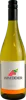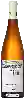
Winery Adolf StörzelAdolfo Rüdesheimer Drachenstein Blauer Spätburgunder Weissherbst
 Pink wine
This wine generally goes well with vegetarian
Food and wine pairings with Adolfo Rüdesheimer Drachenstein Blauer Spätburgunder Weissherbst
Pairings that work perfectly with Adolfo Rüdesheimer Drachenstein Blauer Spätburgunder Weissherbst

Original food and wine pairings with Adolfo Rüdesheimer Drachenstein Blauer Spätburgunder Weissherbst
The Adolfo Rüdesheimer Drachenstein Blauer Spätburgunder Weissherbst of Winery Adolf Störzel matches generally quite well with dishes of vegetarian such as recipes of quiche without pastry.
Details and technical informations about Winery Adolf Störzel's Adolfo Rüdesheimer Drachenstein Blauer Spätburgunder Weissherbst.
Discover the grape variety: Villard blanc
Interspecific crossing between 6468 Seibel and 6905 Seibel or subéreux, obtained by the House of Seyve-Villard of Saint Vallier in the Drôme. Together with Villard noir or 18315 Seyve-Villard, these were the two most widely propagated direct-producing hybrids. The white Villard has also been used as a progenitor for new varieties. It can be found in Hungary, Mexico, Brazil, Canada, the United States and Japan. In the south of France, some old vines still exist. We have also found it in private homes where it is grown in pergolas for the consumption of its excellent grapes at full maturity. Today, it is on the verge of extinction, although it is registered in the Official Catalogue of wine grape varieties, list A1.
Informations about the Winery Adolf Störzel
The Winery Adolf Störzel is one of of the world's great estates. It offers 27 wines for sale in the of Rheingau to come and discover on site or to buy online.

The wine region of Rheingau
Rheingau is one of the most important of Germany's 13 Anbaugebiete wine regions. However it is far from the biggest; with 3,076 hectares (7,600 acres) of Vineyard">Vineyards documented in 2012, its output is around one tenth of that from the Pfalz and Rheinhessen regions. Located on the Rhine a 20-minute drive west of Frankfurt, the -gau suffix denotes that it was once a county of the Frankish Empire. The classic Rheingau wine is a DryRiesling with pronounced Acidity and aromas of citrus fruits and smoke-tinged minerality – typically more "masculine" than its equivalent from the Mosel.
The word of the wine: Flavours
There are generally four so-called fundamental flavours: acidity, bitterness, sweetness and saltiness. The first three are considered to be the building blocks of the structure of wines. They are perceived by the taste buds that cover the surface of the tongue.