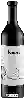
Winery Adega XesteiroAutor Vino De Fornelos O Rosal
 Red wine



In the mouth this red wine is a powerful.
This wine generally goes well with poultry, beef or veal.
Taste structure of the Autor Vino De Fornelos O Rosal from the Winery Adega Xesteiro
Light | Bold | |
Smooth | Tannic | |
Dry | Sweet | |
Soft | Acidic |
In the mouth the Autor Vino De Fornelos O Rosal of Winery Adega Xesteiro in the region of Valence is a powerful.
Food and wine pairings with Autor Vino De Fornelos O Rosal
Pairings that work perfectly with Autor Vino De Fornelos O Rosal



Original food and wine pairings with Autor Vino De Fornelos O Rosal

The Autor Vino De Fornelos O Rosal of Winery Adega Xesteiro matches generally quite well with dishes of beef, pasta or veal such as recipes of melt-in-the-mouth pork tenderloin casserole, simple chinese noodle soup or bigos (polish sauerkraut with paprika).
Details and technical informations about Winery Adega Xesteiro's Autor Vino De Fornelos O Rosal.
Discover the grape variety: Arbane
Arbane or arbanne is a very old white grape variety from the north/east of France, coming from the Aube and more precisely from the Champagne region. The Comité Interprofessionnel des Vins de Champagne wishes to preserve the use of traditional grape varieties of Champagne. The Arbane is a small bunch of grapes with small berries and a very sweet pulp, a late variety that needs sun and heat to concentrate all its sugars. It gives a wine rich in alcohol, elegant and nervous, with a floral nose and a nice acidity.
Last vintages of this wine
The best vintages of Autor Vino De Fornelos O Rosal from Winery Adega Xesteiro are 0
Informations about the Winery Adega Xesteiro
The Winery Adega Xesteiro is one of of the world's greatest estates. It offers 3 wines for sale in the of Valence to come and discover on site or to buy online.

The wine region of Valence
Valencia is a province in the centre of Spain's sunny east coast, perhaps better known for its oranges (and paella) than its wine. The administrative Center of Valencia is the city of the same name, the third largest in Spain and the largest port on the Mediterranean. Archaeological evidence suggests that wine making in Valencia dates back more than a thousand years, but the region has never been particularly prominent on the world wine map. In modern times, Valencia's wine production has focused on quantity rather than quality, although this is gradually changing.
The word of the wine: Film
Skin of the grape containing the colouring matter of red wines (anthocyanins), the most noble tannins and the essential aromatic substances.