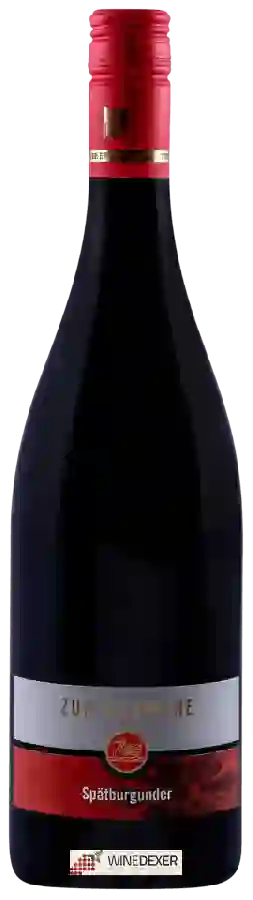
Winery Zur SchwaneSpätburgunder
 Red wine



In the mouth this red wine is a with a nice freshness.
This wine generally goes well with poultry, beef or veal.

Taste structure of the Spätburgunder from the Winery Zur Schwane
Light | Bold | |
Smooth | Tannic | |
Dry | Sweet | |
Soft | Acidic |
In the mouth the Spätburgunder of Winery Zur Schwane in the region of Franken is a with a nice freshness.
Food and wine pairings with Spätburgunder
Pairings that work perfectly with Spätburgunder



Original food and wine pairings with Spätburgunder

The Spätburgunder of Winery Zur Schwane matches generally quite well with dishes of beef, veal or game (deer, venison) such as recipes of beef kidney, porcini sauce or cassoulet of yesteryear.
Details and technical informations about Winery Zur Schwane's Spätburgunder.
Discover the grape variety: Tinto Fino
Structured, elegant reds with a deep, dark ruby color, firm, fine tannins and a dense palate, offering intense aromas of black fruits (blackberry, blackcurrant, plum), black cherry, tobacco, leather, spices and balsamic notes. Fine cellaring potential, excelling in American and French oak ageing. Star of Ribera del Duero DO (Vega Sicilia, Pingus, Pesquera) on the Castilian high plateaux. Synonym for tempranillo in Ribera del Duero.
Last vintages of this wine
The best vintages of Spätburgunder from Winery Zur Schwane are 0
Informations about the Winery Zur Schwane
The Winery Zur Schwane is one of of the world's greatest estates. It offers 51 wines for sale in the of Franken to come and discover on site or to buy online.

The wine region of Franken
Homeland of German Silvaner: dry, straight, mineral and lively whites with notes of green apple, citrus, fresh herbs and a saline touch, planted here for over 350 years (1,500 ha, a quarter of the vineyard). Also supple, floral Müller-Thurgau, taut Riesling, aromatic Bacchus. Some discreet reds (Spätburgunder). 6,040 ha in Bavaria along the Main around Würzburg, red sandstone and shell-limestone soils.
The word of the wine: Animal
Generic smell of aromatic families reminiscent of fur, game, musk, civet, amber and sometimes unpleasant smells of wet hair. The old books on tasting give as an example of animal aroma the belly of hare.