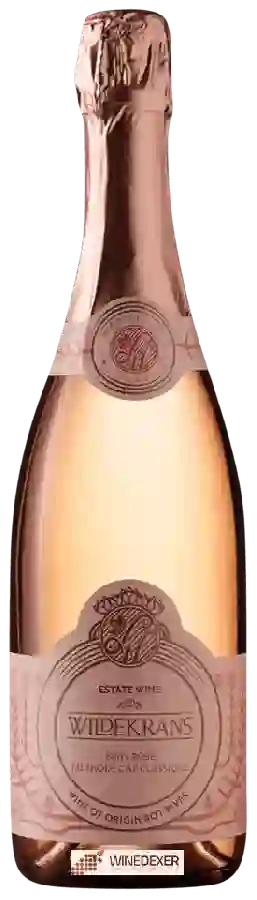
Winery WildekransMéthode Cap Classique Brut Rosé
 Sparkling wine



This wine is a blend of 2 varietals which are the Chardonnay and the Pinot noir.
This wine generally goes well with pork, vegetarian or poultry.

Wine flavors and olphactive analysis


On the nose the Méthode Cap Classique Brut Rosé of Winery Wildekrans in the region of Western Cape often reveals types of flavors of non oak, microbio or oak and sometimes also flavors of red fruit.
Food and wine pairings with Méthode Cap Classique Brut Rosé
Pairings that work perfectly with Méthode Cap Classique Brut Rosé



Original food and wine pairings with Méthode Cap Classique Brut Rosé



The Méthode Cap Classique Brut Rosé of Winery Wildekrans matches generally quite well with dishes of veal, pork or game (deer, venison) such as recipes of veal roast casserole with mushrooms, green lentils strasbourg style or mixed paella valenciana.
Details and technical informations about Winery Wildekrans's Méthode Cap Classique Brut Rosé.
Discover the grape variety: Chardonnay
Whites with many faces: mineral and taut at Chablis (lemon, green apple, flint), opulent and buttery at Meursault and Puligny-Montrachet (hazelnut, brioche, yellow fruits), tense and chalky in Champagne (Blanc de Blancs). Also vinified sparkling and widely exported (Sonoma, Margaret River, Casablanca). A Burgundian variety, a cross of Pinot Noir × Gouais Blanc, half-sibling of Aligoté.
Last vintages of this wine
The best vintages of Méthode Cap Classique Brut Rosé from Winery Wildekrans are 2012, 2016, 0, 2015 and 2013.
Informations about the Winery Wildekrans
The Winery Wildekrans is one of of the world's great estates. It offers 41 wines for sale in the of Bot River to come and discover on site or to buy online.

The wine region of Bot River
Ward of the Walker Bay district (Western Cape, South Africa) between Houw Hoek and the Bot River lagoon, 50 km from Stellenbosch: Chenin Blanc and Sauvignon Blanc are the signature aromatic whites; Cabernet Sauvignon, Pinot Noir and Shiraz as reds. Mixed Bokkeveld shale and Table Mountain sandstone soils, valley exposed to Atlantic and lagoon breezes — late ripening, aromatic complexity and balanced acidity. Small independent estates, distinctive maritime profile.
The wine region of Western Cape
Cradle of South African wine. Signature Chenin Blanc (Steen, 20%) in ample, fresh whites with notes of quince, yellow apple, honey and acacia flower, from crisp dry to sweet. Sharp, iodised Sauvignon Blanc (Walker Bay, Constantia), balanced Chardonnay. Reds: emblematic Pinotage with roasted aromas (coffee, plum, smoke), firm Cabernet Sauvignon, spicy Syrah.
The word of the wine: Vinification of sweet wines
Moelleux and liquoreux wines are characterized by the presence of residual sugars (natural sugar of the grape), not transformed into alcohol under the effect of yeasts. The fermentation is stopped by cold and by the addition of sulphur dioxide (sulphur).