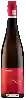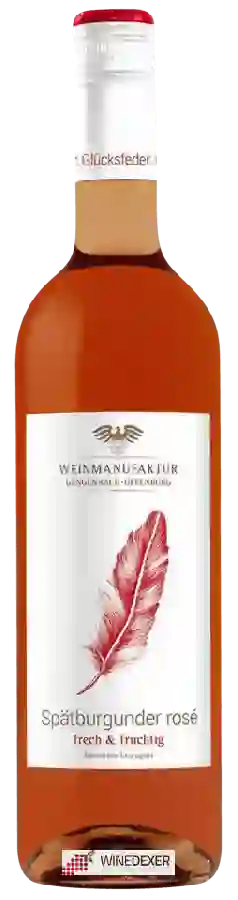
Winery Weinmanufaktur GengenbachGlücksfeder Spätburgunder Rosé
 Pink wine


This wine generally goes well with vegetarian

Food and wine pairings with Glücksfeder Spätburgunder Rosé
Pairings that work perfectly with Glücksfeder Spätburgunder Rosé

Original food and wine pairings with Glücksfeder Spätburgunder Rosé
The Glücksfeder Spätburgunder Rosé of Winery Weinmanufaktur Gengenbach matches generally quite well with dishes of vegetarian such as recipes of vegan leek and tofu quiche.
Details and technical informations about Winery Weinmanufaktur Gengenbach's Glücksfeder Spätburgunder Rosé.
Discover the grape variety: Trebbiano di Soave
Lively and structured dry whites with a pale golden colour, slender palate and preserved acidity, with signature aromas of almond (hallmark), white flowers (acacia), citrus, white stone fruit (apple) and mineral notes. An airy and taut profile. Traditional component of Soave DOC, contributing to the aromatic richness of great Venetian whites. Genetically identical to Verdicchio delle Marche, an Italian white variety grown in Veneto around Soave.
Last vintages of this wine

The best vintages of Glücksfeder Spätburgunder Rosé from Winery Weinmanufaktur Gengenbach are 0, 2018
Informations about the Winery Weinmanufaktur Gengenbach
The Winery Weinmanufaktur Gengenbach is one of of the world's greatest estates. It offers 93 wines for sale in the of Baden to come and discover on site or to buy online.

The wine region of Baden
German capital of Pinot Noir (Spätburgunder): silky, fine reds with notes of red fruits, cherry, undergrowth and sweet spices, melted tannins. Round Grauburgunder (Pinot Gris), lively Weissburgunder, supple Müller-Thurgau, mineral Riesling. Germany's 3rd region (15,000 ha) in Baden-Württemberg facing Alsace, one of the country's warmest climates, volcanic soils at the Kaiserstuhl. Cradle of modern great German reds, elegant and fine.
The word of the wine: Vine
Climbing shrubs with woody stems called shoots that produce grapes in clusters.