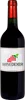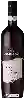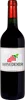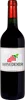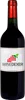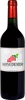
Winery Weinhaus EberstädtEberstädter Dornfelder Trocken
 wine
wine
This wine generally goes well with
The Eberstädter Dornfelder Trocken of the Winery Weinhaus Eberstädt is in the top 0 of wines of Württemberg.
Details and technical informations about Winery Weinhaus Eberstädt's Eberstädter Dornfelder Trocken.
Discover the grape variety: Muskat Oliver
Obtained in Hungary in 1930 by Pal Kocsis by crossing the pozsonyi fehér (pressburger or white presbourg) and the pearl of Csaba. This double-ended variety is found in Hungary, Ukraine, Russia, the Slovak Republic (small Carpathians), the Czech Republic (Moravia), etc. It is virtually unknown in France.
Informations about the Winery Weinhaus Eberstädt
The Winery Weinhaus Eberstädt is one of of the world's great estates. It offers 17 wines for sale in the of Württemberg to come and discover on site or to buy online.

The wine region of Württemberg
Württemberg is known as Germany's premier red wine region. With almost 11,500 hectares (28,500 acres) of vineyards, it is the fourth-largest wine region in the country. Found adjacent to Baden and South of Franken, Wüttemberg is a particularly hilly and rural wine-region. Almost 70-percent of Württemberg wines are red, predominantly made from Trollinger, SchwarzRiesling and Lemberger.
The word of the wine: Chaptalization
The addition of sugar at the time of fermentation of the must, an ancient practice, but theorized by Jean-Antoine Chaptal at the dawn of the 19th century. The sugar is transformed into alcohol and allows the natural degree of the wine to be raised in a weak or cold year, or - more questionably - when the winegrower has a harvest that is too large to obtain good maturity.