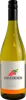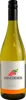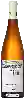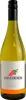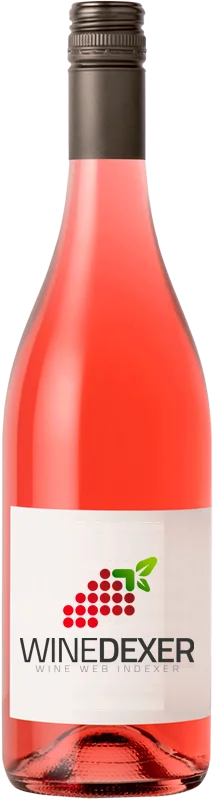
Weingut FaustOrtswein Martinsthal Rosé Trocken
 Pink wine
This wine generally goes well with vegetarian
Food and wine pairings with Ortswein Martinsthal Rosé Trocken
Pairings that work perfectly with Ortswein Martinsthal Rosé Trocken

Original food and wine pairings with Ortswein Martinsthal Rosé Trocken
The Ortswein Martinsthal Rosé Trocken of Weingut Faust matches generally quite well with dishes of vegetarian such as recipes of light tuna-tomato quiche (without cream).
Details and technical informations about Weingut Faust's Ortswein Martinsthal Rosé Trocken.
Discover the grape variety: Salagnin
Discovered in the 1870s by Mr. Robin, who lived in the Drôme at the time in Lapeyrouse-Mornay, this ancient grape variety is believed to have originated in the north of Isère. It can also be found in Switzerland. According to Thierry Lacombe (I.N.R.A./Montpellier), it is the result of a natural intraspecific crossing between Tressot Noir and Mondeuse Blanche. It should be noted in passing that, on the one hand, it has exactly the same parents as the mondeuse noire, that on the other hand, it is the mother of the diolinoir and, finally, is related to the servanin. Robin noir is not widely propagated today because it is not well known, although it is listed in the Official Catalogue of Wine Grape Varieties, list A1.
Informations about the Weingut Faust
The Weingut Faust is one of of the world's great estates. It offers 38 wines for sale in the of Rheingau to come and discover on site or to buy online.

The wine region of Rheingau
Rheingau is one of the most important of Germany's 13 Anbaugebiete wine regions. However it is far from the biggest; with 3,076 hectares (7,600 acres) of Vineyard">Vineyards documented in 2012, its output is around one tenth of that from the Pfalz and Rheinhessen regions. Located on the Rhine a 20-minute drive west of Frankfurt, the -gau suffix denotes that it was once a county of the Frankish Empire. The classic Rheingau wine is a DryRiesling with pronounced Acidity and aromas of citrus fruits and smoke-tinged minerality – typically more "masculine" than its equivalent from the Mosel.
The word of the wine: Thermoregulation
Control of the vinification temperatures (by circulating hot or cold water on the walls of the vats, for example). This is a major step forward, which in particular helps to preserve the freshness of the aromas threatened by excessive temperature rises during fermentation.