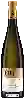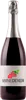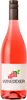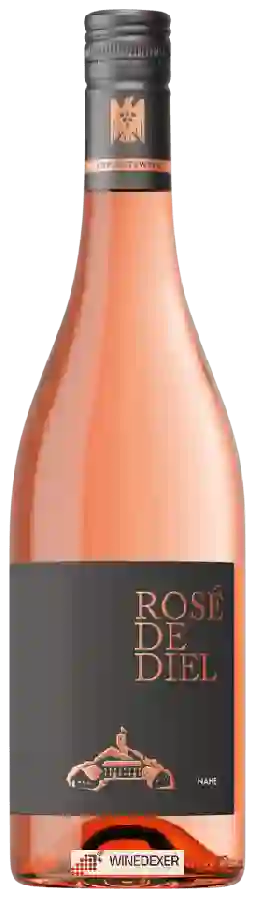
Winery DielRosé de Diel Trocken
 Pink wine


This wine generally goes well with vegetarian
The Rosé de Diel Trocken of the Winery Diel is in the top 70 of wines of Nahe.
Wine flavors and olphactive analysis






On the nose the Rosé de Diel Trocken of Winery Diel in the region of Nahe often reveals types of flavors of non oak, earth or microbio and sometimes also flavors of vegetal, oak or tree fruit.
Food and wine pairings with Rosé de Diel Trocken
Pairings that work perfectly with Rosé de Diel Trocken

Original food and wine pairings with Rosé de Diel Trocken
The Rosé de Diel Trocken of Winery Diel matches generally quite well with dishes of vegetarian such as recipes of quiche without pastry, courgette and blue cheese.
Details and technical informations about Winery Diel's Rosé de Diel Trocken.
Discover the grape variety: Blanc Cardon
An ancient grape variety from the Garonne valley, long confused with the white mauzac. Today, it is practically no longer present in the vineyard and is therefore on the verge of extinction.
Last vintages of this wine

The best vintages of Rosé de Diel Trocken from Winery Diel are 2015, 2014, 2013, 2011 and 2010.
Informations about the Winery Diel
The Winery Diel is one of of the world's greatest estates. It offers 88 wines for sale in the of Nahe to come and discover on site or to buy online.

The wine region of Nahe
Nahe is one of the smaller German wine regions, named after the Nahe river which joins the Rhein at Rheinhessen/bingen">Bingen. The viticultural carea here is characterised by dramatic topography with steep slopes and craggy outcrops of metamorphic rock. Like most of the regions on or near the Rhine, its most prestigious wines are made from Riesling. There are around 4,000 hectares (10,000 acres) of Vineyards, spread across seven Grosslagen (wine districts) and over 300 Einzellagen (individual vineyard sites).
The word of the wine: Finesse
Quality of a delicate and elegant wine.