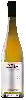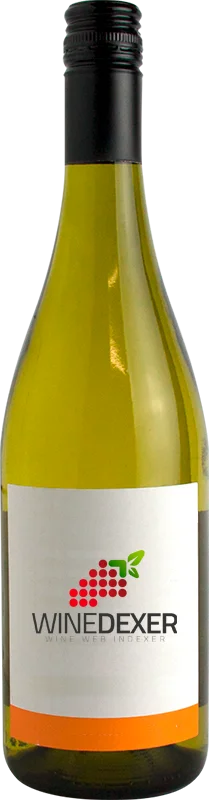
Winery Weinbau Dr. LindickeWerderaner Wachtelberg Sauvignon Blanc Spätlese
 White wine
In the mouth this white wine is a with a nice freshness.
This wine generally goes well with vegetarian, shellfish or goat cheese.
Taste structure of the Werderaner Wachtelberg Sauvignon Blanc Spätlese from the Winery Weinbau Dr. Lindicke
Light | Bold | |
Dry | Sweet | |
Soft | Acidic |
In the mouth the Werderaner Wachtelberg Sauvignon Blanc Spätlese of Winery Weinbau Dr. Lindicke in the region of Saale-Unstrut is a with a nice freshness.
Food and wine pairings with Werderaner Wachtelberg Sauvignon Blanc Spätlese
Pairings that work perfectly with Werderaner Wachtelberg Sauvignon Blanc Spätlese


Original food and wine pairings with Werderaner Wachtelberg Sauvignon Blanc Spätlese
The Werderaner Wachtelberg Sauvignon Blanc Spätlese of Winery Weinbau Dr. Lindicke matches generally quite well with dishes of shellfish, vegetarian or goat cheese such as recipes of periwinkles - the perfect cook!, cream and tuna quiche or croque monsieur with sunny vegetables.
Details and technical informations about Winery Weinbau Dr. Lindicke's Werderaner Wachtelberg Sauvignon Blanc Spätlese.
Discover the grape variety: Pavana
A very old grape variety grown mainly in Italy. Nowadays, it can be found much more in the Trentino region and in the province of Bellino, ... in France it is almost unknown. Note that it is related to Schiava Lombardo and Turca.
Informations about the Winery Weinbau Dr. Lindicke
The Winery Weinbau Dr. Lindicke is one of of the world's great estates. It offers 26 wines for sale in the of Saale-Unstrut to come and discover on site or to buy online.

The wine region of Saale-Unstrut
Saale-Unstrut is the northernmost of Germany's 13 wine-growing regions. At 51 degrees northern latitude, it is one of the most northerly wine regions in the world. It takes its name from the two rivers on the banks of which the Vines of the region grow, and is composed of three non-contiguous Parts located mainly in the federal state of Saxony-Anhalt, with around 650 hectares (1600 acres) of Vineyards, often terraced, on South and south-west-facing slopes along the narrow river valleys. A smaller area of 20 hectares (50 acres) is located in the state of Thüringen and a block of just 7 hectares (17 acres) in Brandenburg.
The word of the wine: Vatting
After five to eight days of alcoholic fermentation, it is possible to prolong the maceration in order to extract the maximum amount of matter from the marc. The wines obtained in this way are rich and full-bodied, and in principle are intended for laying down.