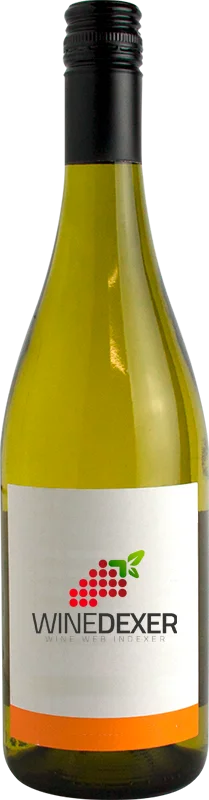
Winery Víno LeviceSchoeller Devín
 White wine
This wine generally goes well with
Details and technical informations about Winery Víno Levice's Schoeller Devín.
Discover the grape variety: Mouyssaguès
Mouyssaguès is a grape variety that originated in the southwest of France. Today it occupies just under a hectare, whereas in the past it filled the entire Lot valley. Its adult leaves have between 7 and 9 lobes. These turn completely red in the autumn. Its blue-black berries are elliptical and short. As for its truncated cone-shaped bunches, they are of medium size. They are also compact and winged. Mouyssaguès has only one approved clone, 1.150. A dozen others have been planted in Aveyron. Mouyssaguès can bud in the middle or late, 8 to 10 days after Chasselas. It ripens early for the second time. Vigorous, it is not very sensitive to the various diseases common to these grape varieties. Although productive, it is preferable to prune it long. The mouyssaguès makes a very astringent and coloured wine. This variety can also be called negret, faroneux, rouge menu or peyregord. Because of its high yield, it is often called the poor man's vine.
Informations about the Winery Víno Levice
The Winery Víno Levice is one of of the world's great estates. It offers 12 wines for sale in the of Nitrianska to come and discover on site or to buy online.

The wine region of Nitrianska
The wine region of Nitrianska of Slovak Republic. Wineries and vineyards like the Domaine Tajna or the Domaine Vins produce mainly wines white, red and pink. The most planted grape varieties in the region of Nitrianska are Cabernet-Sauvignon, Riesling and Chardonnay, they are then used in wines in blends or as a single variety. On the nose of Nitrianska often reveals types of flavors of non oak, earth or oak and sometimes also flavors of tree fruit, citrus fruit or red fruit.
The word of the wine: Chaptalization
The addition of sugar at the time of fermentation of the must, an ancient practice, but theorized by Jean-Antoine Chaptal at the dawn of the 19th century. The sugar is transformed into alcohol and allows the natural degree of the wine to be raised in a weak or cold year, or - more questionably - when the winegrower has a harvest that is too large to obtain good maturity.