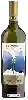
Winery Villa LuciaVivaio Vernaccia di San Gimignano
 wine
wine
This wine generally goes well with
The Vivaio Vernaccia di San Gimignano of the Winery Villa Lucia is in the top 0 of wines of Vernaccia di San Gimignano.
Details and technical informations about Winery Villa Lucia's Vivaio Vernaccia di San Gimignano.
Discover the grape variety: Bronner
An interspecific cross between merzling and rondo obtained in 1975 by Norbert Becker of the Freiburg Research Institute in Germany. It has the particularity of having only one gene for resistance to mildew and powdery mildew. However, the I.N.R.A. Bordeaux Sciences Agro has since noted a loss of efficiency on mildew due to a bypass. It can be found in Denmark, the Netherlands, Germany, Belgium, Italy, England, etc. It is not very widespread today and is almost unknown in France. It should not be confused with another variety of the same name, which comes from a Pinot Blanc seedling, also obtained in Germany by Johann Philipp Bronner.
Informations about the Winery Villa Lucia
The Winery Villa Lucia is one of of the world's greatest estates. It offers 5 wines for sale in the of Vernaccia di San Gimignano to come and discover on site or to buy online.

The wine region of Vernaccia di San Gimignano
The wine region of Vernaccia di San Gimignano is located in the region of San Gimignano of Toscane of Italy. Wineries and vineyards like the Domaine Vagnoni or the Domaine Vagnoni produce mainly wines white, red and sparkling. The most planted grape varieties in the region of Vernaccia di San Gimignano are Chardonnay, Sangiovese and Vermentino, they are then used in wines in blends or as a single variety. On the nose of Vernaccia di San Gimignano often reveals types of flavors of citrus, mango or grass and sometimes also flavors of straw, grapefruit or caramel.
The wine region of Tuscany
Tuscany is one of the most famous and prolific wine regions in Europe. It is best known for its Dry red wines made from Sangiovese grapes, which dominate production. These include Chianti, Brunello di Montalcino and Vino Nobile di Montepulciano. The region's Vin Santo is also highly prized, as are its passito dessert wines, though these are produced in comparatively tiny quantities.
The word of the wine: Tasting
Sensory analysis of the wine according to a precise procedure and steps, using an appropriate vocabulary.