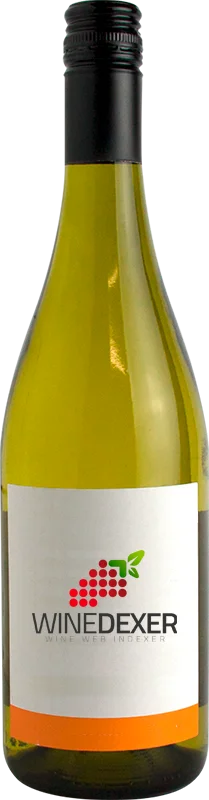
Winery Villa ElvinaBianco Dry
 White wine


This wine generally goes well with
Details and technical informations about Winery Villa Elvina's Bianco Dry.
Discover the grape variety: Etraire de l'Aduï
Would be finding its first origins in the valley of Isere, one would have indeed found it in the Mas de l'Aduï in Saint Ismier. We find a certain resemblance with the Persian. Today its multiplication in nurseries is very weak, registered however with the official Catalogue of the varieties of vine list A1 under the name of Etraire de la Dui.
Last vintages of this wine
The best vintages of Bianco Dry from Winery Villa Elvina are 0
Informations about the Winery Villa Elvina
The Winery Villa Elvina is one of of the world's greatest estates. It offers 10 wines for sale in the of Vino da Tavola to come and discover on site or to buy online.

The wine region of Vino da Tavola
Vino da Tavola was the most basic classification of Italian wines. It is now renamed simply "Vino" and appears on labels as Vino d'Italia. The original name literally means "table wine" as opposed to premium wines from specific geographical locations (see EU wine label). In May 2011, the first legal steps were taken to abolish the Vino da Tavola category, in favor of a New classification of wines called simply Vino.
The word of the wine: Vatting
After five to eight days of alcoholic fermentation, it is possible to prolong the maceration in order to extract the maximum amount of matter from the marc. The wines obtained in this way are rich and full-bodied, and in principle are intended for laying down.