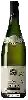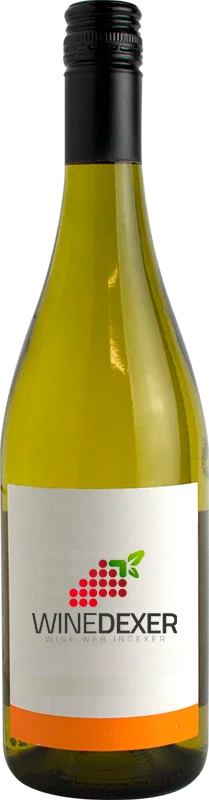
Vignoble Macquigneau BrissonDomaine de la Vieille Riboulerie Fiefs Vendéens Mareuil Blanc
 White wine
This wine generally goes well with
Details and technical informations about Vignoble Macquigneau Brisson's Domaine de la Vieille Riboulerie Fiefs Vendéens Mareuil Blanc.
Discover the grape variety: Subéreux
An interspecific cross made by Albert Seibel (1844-1936) between 4595 Seibel and 4199 Seibel. Little cultivated, it was used as a progenitor in obtaining direct producer hybrids known as Villard blanc, Villard noir, Vignoles, ... .
Informations about the Vignoble Macquigneau Brisson
The Vignoble Macquigneau Brisson is one of wineries to follow in Vallée de la Loire.. It offers 10 wines for sale in the of Loire Valley to come and discover on site or to buy online.

The wine region of Loire Valley
The Loire Valley is a key wine region in western France. It follows the course of the Loire River on its Long journey through the heart of France, from the inland hills of the Auvergne to the plains of the French Atlantic coast near Nantes (Muscadet country). Important in terms of quantity and quality, the region produces large quantities (about 4 million h/l each year) of everyday wines, as well as some of France's greatest wines. Diversity is another of the region's major assets; the styles of wine produced here range from the light, tangy Muscadet to the Sweet, honeyed Bonnezeaux, the Sparkling whites of Vouvray and the juicy, Tannic reds of Chinon and Saumur.
The word of the wine: Chaptalization
The addition of sugar at the time of fermentation of the must, an ancient practice, but theorized by Jean-Antoine Chaptal at the dawn of the 19th century. The sugar is transformed into alcohol and allows the natural degree of the wine to be raised in a weak or cold year, or - more questionably - when the winegrower has a harvest that is too large to obtain good maturity.