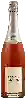
Winery Varichon & ClercCharles de Saint-Céran Cuvée Privée Rosé Brut
 Sparkling wine
This wine is a blend of 3 varietals which are the Airen, the Gamay noir and the Merlot.
This wine generally goes well with beef and game (deer, venison).

Food and wine pairings with Charles de Saint-Céran Cuvée Privée Rosé Brut
Pairings that work perfectly with Charles de Saint-Céran Cuvée Privée Rosé Brut


Original food and wine pairings with Charles de Saint-Céran Cuvée Privée Rosé Brut
The Charles de Saint-Céran Cuvée Privée Rosé Brut of Winery Varichon & Clerc matches generally quite well with dishes of beef or game (deer, venison) such as recipes of hungarian goulash or wild boar stew marinated in red wine.
Details and technical informations about Winery Varichon & Clerc's Charles de Saint-Céran Cuvée Privée Rosé Brut.
Discover the grape variety: Airen
Simple, refreshing whites with a pale robe and a tender mouth, featuring discreet aromas of apple, citrus, fresh herbs and neutral notes. Moderate acidity, best drunk young. Very productive and drought-resistant, it produces easy-drinking whites in La Mancha DO and Valdepeñas DO on the Castilian plateau, and has historically supplied the base for Brandy de Jerez distillation. Native Spanish grape, long the world's most planted by surface area.
Informations about the Winery Varichon & Clerc
The Winery Varichon & Clerc is one of of the world's great estates. It offers 26 wines for sale in the of Burgundy to come and discover on site or to buy online.

The wine region of Burgundy
Absolute reference for great terroir wines: opulent, mineral Chardonnay in whites (chiselled Chablis, buttery Meursault, majestic Montrachet), fine and silky Pinot Noir in reds (full-bodied Gevrey, structured Pommard, delicate Volnay). Exceptional age-worthy wines with complex notes - red fruits, undergrowth, butter, hazelnut. Some lively Aligoté and light Gamay (Mâconnais). 29,500 ha, 84 tiered AOCs (Régionale, Village, 1er Cru, Grand Cru), 1,247 UNESCO Climats.
The word of the wine: Density per hectare
Number of vines per hectare. For the same yield, a vine planted with 3,000 vines per hectare bears many more bunches (per vine) than a vine planted with 10,000. The grapes will therefore be less rich in sugar and polyphenols (tannins, aromas...).