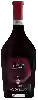
Winery Valle CaldaBonarda Frizzante
 wine
wine
This wine generally goes well with
The Bonarda Frizzante of the Winery Valle Calda is in the top 0 of wines of Oltrepò Pavese.
Details and technical informations about Winery Valle Calda's Bonarda Frizzante.
Discover the grape variety: Pinella blanca
A very old grape variety that has been cultivated for a very long time in Italy - where it originated - and that can still be found today in the Veneto region. It is also known in Slovenia and Bulgaria, but is virtually unknown in France. According to genetic analysis, it is related to the white gouais, which it resembles somewhat. There is a Pinella nera, but it is not clear whether it is the black form.
Informations about the Winery Valle Calda
The Winery Valle Calda is one of of the world's great estates. It offers 28 wines for sale in the of Oltrepò Pavese to come and discover on site or to buy online.

The wine region of Oltrepò Pavese
The wine region of Oltrepò Pavese is located in the region of Lombardie of Italy. We currently count 256 estates and châteaux in the of Oltrepò Pavese, producing 794 different wines in conventional, organic and biodynamic agriculture. The wines of Oltrepò Pavese go well with generally quite well with dishes .
The wine region of Lombardia
Lombardy is one of Italy's largest and most populous regions, located in the north-central Part of the country. It's home to a handful of popular and well-known wine styles, including the Bright, cherry-scented Valtellina and the high-quality Sparkling wines Franciacorta and Oltrepo Pavese Metodo Classico. Lombardy is Italy's industrial powerhouse, with the country's second largest city (Milan) as its regional capital. Despite this, the region has vast tracts of unspoiled countryside, home to many small wineries that produce a significant portion of the region's annual wine production of 1.
The word of the wine: Deposit
Solid particles that can naturally coat the bottom of a bottle of wine. It is rather a guarantee that the wine has not been mistreated: in fact, to avoid the natural deposit, rather violent processes of filtration or cold passage (- 7 or - 8 °C) are used in order to precipitate the tartar (the small white crystals that some people confuse with crystallized sugar: just taste to dissuade you from it)