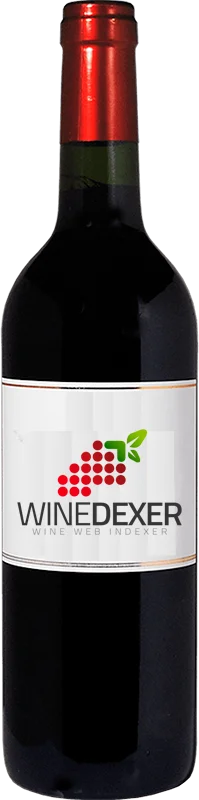
Winery Val d'OrbieuLe Pouzols
 Red wine
This wine generally goes well with
Details and technical informations about Winery Val d'Orbieu's Le Pouzols.
Discover the grape variety: Mècle
Mècle noir is a grape variety that originated in France (Rhône-Alpes valley). It produces a variety of grape specially used for wine making. It is rare to find this grape to eat on our tables. We can find the Mècle noir cultivated in these vineyards: Savoie & Bugey, South-West.
Informations about the Winery Val d'Orbieu
The Winery Val d'Orbieu is one of of the world's great estates. It offers 58 wines for sale in the of Coteaux de Narbonne to come and discover on site or to buy online.

The wine region of Coteaux de Narbonne
The wine region of Coteaux de Narbonne is located in the region of Pays d'Oc of Vin de Pays of France. Wineries and vineyards like the Domaine Gérard Bertrand or the Domaine Gérard Bertrand produce mainly wines red, white and pink. The most planted grape varieties in the region of Coteaux de Narbonne are Cabernet-Sauvignon, Merlot and Marselan, they are then used in wines in blends or as a single variety. On the nose of Coteaux de Narbonne often reveals types of flavors of oak, butter or honey and sometimes also flavors of mango, non oak or earth.
The wine region of Pays d'Oc
Pays d'Oc is the PGI for red, white and rosé wines that are produced over a wide area of the southern coast of France. The PGI catchment area corresponds roughly to the Languedoc-roussillon">Languedoc-Roussillon wine region, one of the largest wine regions in France. The area covers all wines that are not produced under the strict laws that govern AOC-level appellations in the regions: among them, Corbières, Minervois and the Languedoc appellation itself. The Pays d'Oc PGI is arguably the most important in France, producing the majority of the country's PGI wines.
The word of the wine: Rebêche (champagne)
Must obtained in excess of the 2 550 litres authorised for a weight of 4 000 kilos of grapes. The first 2 050 litres constitute the cuvée and the next 500 litres the taille. The rebêche represents 1 to 3 % of the total volume and must be distilled or used to make ratafia.