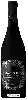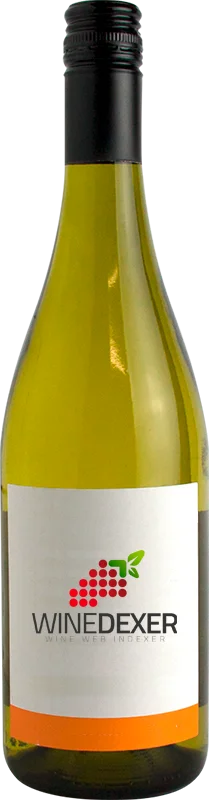
Winery Unigena Brüder SchmidtWeisser Satz
 White wine
This wine generally goes well with
Details and technical informations about Winery Unigena Brüder Schmidt's Weisser Satz.
Discover the grape variety: Malvoisie de Toscane
It was cultivated in ancient times and is believed to be of Greek origin. In Italy, associated with Trebbiano Toscano, it was used to produce the famous Chianti: these two white varieties are no longer part of the vineyard. In France, Tuscan Malvasia is practically unknown. It should be noted that many grape varieties have "malvasia" as a synonym, so confusion between them is always possible.
Informations about the Winery Unigena Brüder Schmidt
The Winery Unigena Brüder Schmidt is one of of the world's greatest estates. It offers 5 wines for sale in the of Burgenland to come and discover on site or to buy online.

The wine region of Burgenland
Burgenland is a large wine-producing region on the eastern border of Austria. Despite the country's image as the producer of some of the world's finest white wines, Austria is also home to a thriving red wine culture: Burgenland, with its sunny, continental summers, is the country's key red wine region, with its wines based mainly on the Blaufränkisch and Zweigelt grape varieties. Sweet, botrytized wines are also a specialty of the region, particularly in the Terroir surrounding the Neusiedlersee lake. The region occupies a narrow strip of land that runs from the Danube River down to Steiermark in the South.
The wine region of Weinland
Weinviertel DAC – whose name translates as "wine quarter" – is an appellation in Niederösterreich (Lower Austria). It is by far the largest Districtus Austriae Controllatus wine region in Austria. It was also the first Austrian wine region to be given that title, in 2002, with a DAC Reserve designation added in 2009. The designation applies only to white wines from the Grüner Veltliner Grape variety.
The word of the wine: Reassembly
During the vinification process, a "cap" is formed at the top of the vats with the solid parts (skin, pulp, pips, etc.), which contain tannins and colouring elements. Pumping over consists of emptying the vat from the bottom and pouring the juice back to the top, in order to mix the cap and the juice and to favour the exchange and the extraction. This old technique allows a better exchange between the solid parts and the liquid.