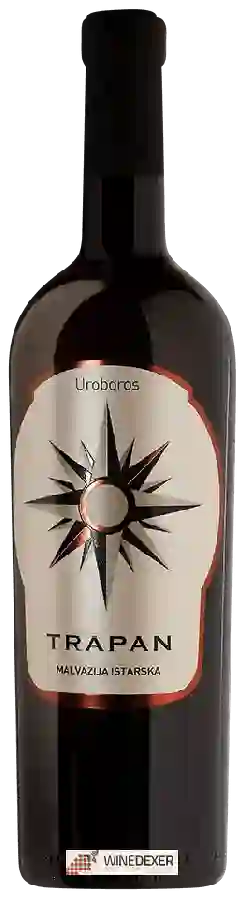
Winery TrapanUroboros
 White wine


This wine generally goes well with
The Uroboros of the Winery Trapan is in the top 60 of wines of Istra.

Wine flavors and olphactive analysis






On the nose the Uroboros of Winery Trapan in the region of Istra often reveals types of flavors of non oak, earth or microbio and sometimes also flavors of vegetal, oak or tree fruit.
Details and technical informations about Winery Trapan's Uroboros.
Discover the grape variety: Muscat de Saint Vallier
Table grape with long clusters and golden berries with thin skin and muscat flesh, featuring a characteristic aromatic sweet flavour (rose, fresh grape). Very rarely vinified. Grown for fresh consumption in south-eastern France, appreciated for its typical muscat flavour and good shelf life. French white table grape variety obtained around 1922 in Saint-Vallier (Drôme), a muscat crossing.
Last vintages of this wine

The best vintages of Uroboros from Winery Trapan are 2012, 2011, 2016, 2014 and 2013.
Informations about the Winery Trapan
The Winery Trapan is one of of the world's greatest estates. It offers 10 wines for sale in the of Istra to come and discover on site or to buy online.

The wine region of Istra
Istrian peninsula on the Adriatic, Croatia's smallest wine region but one of its most renowned. Signature Malvazija Istarska (50-70%): expressive, lively whites with notes of acacia, green apple, citrus, fresh almond and marked saline minerality - a perfect match with seafood. Native Teran in tannic, tangy red (blackberry, blood, earth), a unique profile. Also dense Refošk, round Merlot.
The word of the wine: Presses
The juice that results from pressing the grapes after fermentation. At the end of the maceration, the vats are emptied, the first juice obtained is called the free-run wine and the marc remaining at the bottom of the vat is then pressed to give the press wine. We say more quickly "the presses". Their quality varies according to the vintage and the maceration. A too vigorous extraction releases the tannins of pips and the wine of press can then prove to be very astringent. Often the winemaker raises it separately, deciding later whether or not to incorporate it totally or partially into the grand vin.