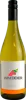
Winery Thürauf GlockeSebastian Grauer Burgunder Trocken
 White wine
In the mouth this white wine is a .
This wine generally goes well with pork, cured meat or mushrooms.
Taste structure of the Sebastian Grauer Burgunder Trocken from the Winery Thürauf Glocke
Light | Bold | |
Dry | Sweet | |
Soft | Acidic |
In the mouth the Sebastian Grauer Burgunder Trocken of Winery Thürauf Glocke in the region of Franken is a .
Food and wine pairings with Sebastian Grauer Burgunder Trocken
Pairings that work perfectly with Sebastian Grauer Burgunder Trocken



Original food and wine pairings with Sebastian Grauer Burgunder Trocken

The Sebastian Grauer Burgunder Trocken of Winery Thürauf Glocke matches generally quite well with dishes of pork, spicy food or mushrooms such as recipes of sausages with kale, tunisian tagine or paupiettes in a casserole with cream.
Details and technical informations about Winery Thürauf Glocke's Sebastian Grauer Burgunder Trocken.
Discover the grape variety: Solaris
Interspecific cross between merzling x Geisenheim 6493 (zarya severa x muscat ottonel) obtained in Germany in 1975 by Norbert Becker. It has the particularity of having only one gene for resistance to mildew and powdery mildew. It can be found in Germany, Belgium, Italy, Switzerland, the Netherlands, Denmark, England, etc. In France, it is still little known.
Informations about the Winery Thürauf Glocke
The Winery Thürauf Glocke is one of of the world's great estates. It offers 49 wines for sale in the of Franken to come and discover on site or to buy online.

The wine region of Franken
Franken, or Franconia in English, is a wine-growing region in the northwest of Germany's historic state of Bavaria. Though Bavaria may be more famous for its beer, Franken boasts a proud viticultural tradition and is one of the most unique regions in the country. There are just over 6,100 hectares (15,073 ac) of vines Planted in Franken and around 80 percent of these are white Grape varieties. Here, Riesling plays second fiddle to the often overlooked Silvaner and Müller-Thurgau.
The word of the wine: Servadou iron
A black grape variety from the southwest that produces a wine with spicy tannins and black currant and raspberry aromas. Under the name of Mansois, it is the main grape variety of Marcillac; it is also one of the important varieties of Gaillacois, where it is called Braucol. It is also used in the blends of other South-Western appellations (Fronton, Lavilledieu, Estaing, Madiran). Syn.: braucol, pinenc, mansois.