The Winery 3 Winner of Rheinhessen
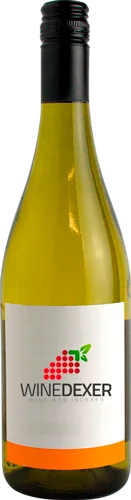
The Winery 3 Winner is one of the best wineries to follow in Rheinhessen.. It offers 1 wines for sale in of Rheinhessen to come and discover on site or to buy online.
Looking for the best Winery 3 Winner wines in Rheinhessen among all the wines in the region? Check out our tops of the best red, white or effervescent Winery 3 Winner wines. Also find some food and wine pairings that may be suitable with the wines from this area. Learn more about the region and the Winery 3 Winner wines with technical and enological descriptions.
How Winery 3 Winner wines pair with each other generally quite well with dishes of pork, shellfish or spicy food such as recipes of currywurst, scallops or scallops express with cognac or turkey paupiettes in poultry sauce.
On the nose the white wine of Winery 3 Winner. often reveals types of flavors of earth, microbio or tree fruit and sometimes also flavors of citrus fruit, tropical fruit. In the mouth the white wine of Winery 3 Winner. is a with a nice freshness.
Rheinhessen is Germany's largest region for producing the quality wines of the Qualitätswein bestimmter Anbaugebiete (QbA) and Prädikatswein designations, with roughly 26,500 hectares (65,000 acres) of Vineyard">Vineyards as of 2014. Many of its most significant viticultural areas are favorably influenced by the Rhine river, which runs aLong its North and eastern borders. The Rhine, along with the Nahe river to the west and the Haardt mountains to its South, form a natural border. Rheinhessen covers an area south of Rheingau, north of Pfalz and east of Nahe, and is located within the Rhineland-Palatinate federal state.
The region has been cultivating Grapes for wine production at least since ancient Roman occupation. It's also the home to the oldest surviving records of a German vineyard. Named Glöck, the vineyard was included in a deed for a church and vineyards gifted by Carloman – a duke of the Franks of the Carolingian family and the uncle of the first Holy Roman Emperor, Charlemagne – to the diocese of Würzburg in 742. Within a century, dozens of villages were cultivating grapes throughout Rheinhessen.
An early documentation of Riesling as a distinct grape variety, identified as Rüssling, was also found in records from the city Worms dating back to 1402. The Size of the region, and its location on the Rhine, has given it a significant role in Germany's wine industry history. Its largest city, Mainz, has been an unofficial Center for wine trade, being home to several national wine organizations including the German Wine Institute and the Association of German Prädikat Wine Estates (Verband Deutscher Prädikats-und Qualitätsweingüter e. V.
Planning a wine route in the of Rheinhessen? Here are the wineries to visit and the winemakers to meet during your trip in search of wines similar to Winery 3 Winner.
Discovered in the 1870s by Mr. Robin, who lived in the Drôme at the time in Lapeyrouse-Mornay, this ancient grape variety is believed to have originated in the north of Isère. It can also be found in Switzerland. According to Thierry Lacombe (I.N.R.A./Montpellier), it is the result of a natural intraspecific crossing between Tressot Noir and Mondeuse Blanche. It should be noted in passing that, on the one hand, it has exactly the same parents as the mondeuse noire, that on the other hand, it is the mother of the diolinoir and, finally, is related to the servanin. Robin noir is not widely propagated today because it is not well known, although it is listed in the Official Catalogue of Wine Grape Varieties, list A1.


