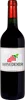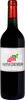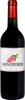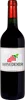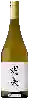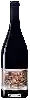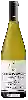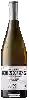
Winery TerruñoTempranillo Blanco
 White wine
In the mouth this white wine is a powerful.
This wine generally goes well with appetizers and snacks, lean fish or shellfish.
Taste structure of the Tempranillo Blanco from the Winery Terruño
Light | Bold | |
Dry | Sweet | |
Soft | Acidic |
In the mouth the Tempranillo Blanco of Winery Terruño in the region of Rioja is a powerful.
Food and wine pairings with Tempranillo Blanco
Pairings that work perfectly with Tempranillo Blanco



Original food and wine pairings with Tempranillo Blanco

The Tempranillo Blanco of Winery Terruño matches generally quite well with dishes of shellfish, appetizers and snacks or lean fish such as recipes of express seafood spaghetti, pretzel and ode mauricette! or breaded fish (whiting).
Details and technical informations about Winery Terruño's Tempranillo Blanco.
Discover the grape variety: Subéreux
An interspecific cross made by Albert Seibel (1844-1936) between 4595 Seibel and 4199 Seibel. Little cultivated, it was used as a progenitor in obtaining direct producer hybrids known as Villard blanc, Villard noir, Vignoles, ... .
Informations about the Winery Terruño
The Winery Terruño is one of of the world's greatest estates. It offers 6 wines for sale in the of Rioja to come and discover on site or to buy online.

The wine region of Rioja
Rioja, in northern Spain, is best known for its berry-flavored, barrel-aged red wines made from Tempranillo and Garnacha. It is probably the leading wine region in Spain. It is certainly the most famous, rivaling only Jerez. The Vineyards follow the course of the Ebro for a hundred kilometres between the towns of Haro and Alfaro.
The word of the wine: Performance
Quantity of grapes harvested per hectare. In AOC, the average yield is limited on the proposal of the appellation syndicate, validated by the Inao. The use of high-performance plant material (especially clones) and better control of vine diseases have increased yields. This is not without consequences on the quality of the wines (dilution) and on the state of the market (too much wine). We must not over-simplify: low yields are not synonymous with quality, and it is often in years with generous harvests that we find the greatest vintages (1982 and 1986 in Bordeaux, 1996 in Champagne, 1990 and 2005 in Burgundy...).