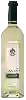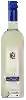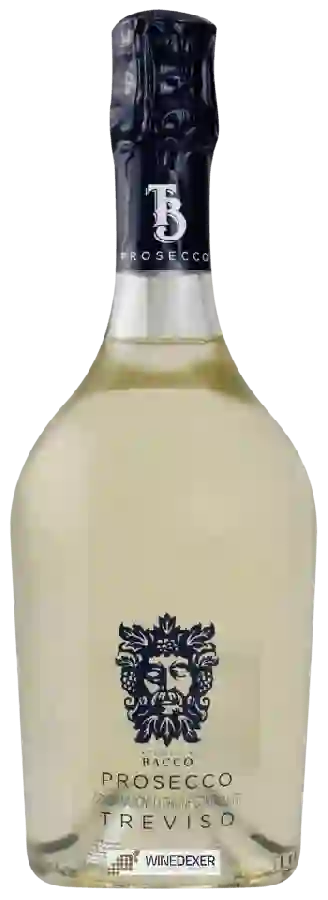
Winery Terre di BaccoProsecco
 wine
wine
This wine generally goes well with
The Prosecco of the Winery Terre di Bacco is in the top 0 of wines of Prosecco di Treviso.
Details and technical informations about Winery Terre di Bacco's Prosecco.
Discover the grape variety: Oberlin noir
Interspecific crossing between riparia Millardet and gamay obtained by Philip Christian Oberlin (1831-1915) who also created in 1897 the Oberlin Viticultural Institute in Colmar (Haut Rhin). This direct-producing hybrid was widely multiplied in the northeast region of France, from Alsace to Burgundy, also in the Loire Valley and in the Centre where our photographs were taken. Today, Oberlin noir is practically no longer cultivated, but a few vines exist here and there, producing very pleasant, albeit atypical, wines. It is nevertheless registered in the Official Catalogue of Vine Varieties, list A1. - Synonymy: 595 Oberlin (for all the synonyms of the grape varieties, click here!).
Last vintages of this wine


The best vintages of Prosecco from Winery Terre di Bacco are 0
Informations about the Winery Terre di Bacco
The Winery Terre di Bacco is one of of the world's greatest estates. It offers 6 wines for sale in the of Prosecco di Treviso to come and discover on site or to buy online.

The wine region of Prosecco di Treviso
The wine region of Prosecco di Treviso is located in the region of Prosecco of Vénétie of Italy. Wineries and vineyards like the Domaine Invivo or the Domaine La Gioiosa produce mainly wines sparkling. The most planted grape varieties in the region of Prosecco di Treviso are Glera et Raboso Piave, they are then used in wines in blends or as a single variety. On the nose of Prosecco di Treviso often reveals types of flavors of citrus, ginger or black fruit and sometimes also flavors of orange peel, toasted almonds or elderflower.
The wine region of Veneto
Veneto is an important and growing wine region in northeastern Italy. Veneto is administratively Part of the Triveneto area, aLong with its smaller neighbors, Trentino-Alto Adige and Friuli-Venezia Giulia. In terms of geography, culture and wine styles, it represents a transition from the Alpine and Germanic-Slavic end of Italy to the warmer, drier, more Roman lands to the South. Veneto is slightly smaller than the other major Italian wine regions - Piedmont, Tuscany, Lombardy, Puglia and Sicily - but it produces more wine than any of them.
The word of the wine: Maceration
Prolonged contact and exchange between the juice and the grape solids, especially the skin. Not to be confused with the time of fermentation, which follows maceration. The juice becomes loaded with colouring matter and tannins, and acquires aromas. For a rosé, the maceration is short so that the colour does not "rise" too much. For white wines too, a "pellicular maceration" can be practised, which allows the wine to acquire more fat.