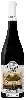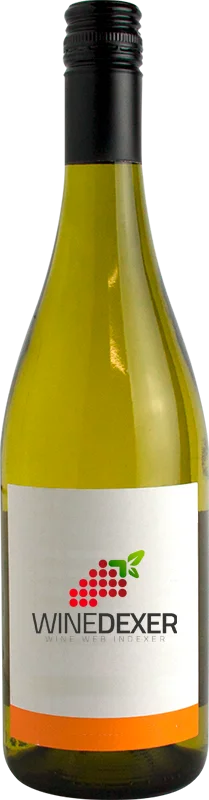
Winery TalismanТбилисури
 White wine



This wine generally goes well with
Details and technical informations about Winery Talisman's Тбилисури.
Discover the grape variety: Counoise
Counoise is a black grape variety of Spanish origin. It is widely cultivated in the southern part of France. It is very similar to the aubun, with which it is often confused, and has a white cottony bud. Unlike the aubun, the leaves of this variety do not have teeth in the petiolar sinus. They are thick and large. Its bunches are medium-sized but its berries are large. It is advisable to prune it short so that it is productive. It matures in the second half of the year, but production depends on the vintage. This grape variety appreciates hillside terroirs, which are stony and warm. It fears grey rot without being sensitive to oidium and mildew. Counoise has two approved clones, 508 and 725. The wine obtained from Counoise is not very colourful. It is fine and fruity. Its aromas are diversified with notes of fruit, flowers and spices.
Last vintages of this wine
The best vintages of Тбилисури from Winery Talisman are 0
Informations about the Winery Talisman
The Winery Talisman is one of of the world's great estates. It offers 50 wines for sale in the of Kakheti to come and discover on site or to buy online.

The wine region of Kakheti
Kakheti is the most important wine region in Georgia in quantitative, qualitative and even historic terms. Almost three-quarters of the country's wine Grapes are grown here, on land that has been used for viticulture for thousands of years. Kakheti is home to some of the oldest human habitations in the entire Caucasus region, and archaeological findings have suggested that wine has been produced here for several thousand years. The region's strong relationship with wine and Vine was captured in Georgia's famous hymn 'Thou Art a Vineyard', written in the 12th Century by King Demetrius I.
The word of the wine: Terroir
Strictly speaking, the notion of terroir corresponds to the geological characteristics of a vineyard. However, when we talk about terroir, we take into account the soil, the climate (even the microclimate), the flora, the fauna, and the human factor that characterizes the practices that make up the art of the craft.