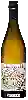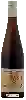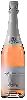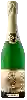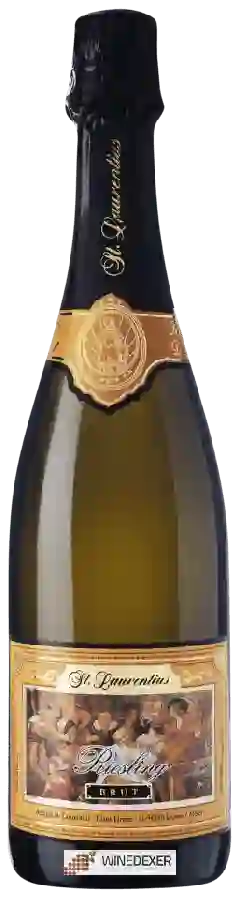
Winery St. LaurentiusRiesling Brut
 Sparkling wine


This wine generally goes well with pork, vegetarian or poultry.

Wine flavors and olphactive analysis


On the nose the Riesling Brut of Winery St. Laurentius in the region of Pfalz often reveals types of flavors of earth, microbio or tree fruit and sometimes also flavors of citrus fruit.
Food and wine pairings with Riesling Brut
Pairings that work perfectly with Riesling Brut



Original food and wine pairings with Riesling Brut



The Riesling Brut of Winery St. Laurentius matches generally quite well with dishes of pork, rich fish (salmon, tuna etc) or spicy food such as recipes of salted lentils, skate with vinegar and capers or coconut curry cauliflower in the cookeo.
Details and technical informations about Winery St. Laurentius's Riesling Brut.
Discover the grape variety: Riesling
Crystalline, taut whites with vibrant acidity and aromas of citrus, green apple, white flowers, vineyard peach and mineral/petrol notes with age. Made as dry (Trocken, Alsace), off-dry (Kabinett, Spätlese) and sweet (Auslese, Beerenauslese, Trockenbeerenauslese, late harvest). Star of the Moselle, Rheingau, Alsace AOC and Wachau. Also exported to Clare Valley and Finger Lakes.
Last vintages of this wine

The best vintages of Riesling Brut from Winery St. Laurentius are 2014, 2011, 0, 2015 and 2016.
Informations about the Winery St. Laurentius
The Winery St. Laurentius is one of of the world's greatest estates. It offers 32 wines for sale in the of Pfalz to come and discover on site or to buy online.

The wine region of Pfalz
Fleshy, dry, fruity Riesling is the region's signature: yellow peach, apricot, ripe citrus, lovely mineral tension. Germany's largest red-wine area (40%), with silky Spätburgunder showing red fruit and spice, darker structured Dornfelder, supple Portugieser. Some rounded Pinot Blanc and Pinot Gris. A 23,640 ha vineyard along the Haardt, among Germany's warmest (>2,000 h of sun).
The word of the wine: Vatting
After five to eight days of alcoholic fermentation, it is possible to prolong the maceration in order to extract the maximum amount of matter from the marc. The wines obtained in this way are rich and full-bodied, and in principle are intended for laying down.