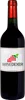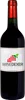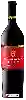
Winery სიხარული (Sikharuli)Хванчкара (Khvanchkara)
 Red wine


This wine generally goes well with
Details and technical informations about Winery სიხარული (Sikharuli)'s Хванчкара (Khvanchkara).
Discover the grape variety: Bacchus blanc
Intraspecific crossing between the sylvaner x riesling and the Müller-Thurgau obtained in 1933 in Germany by Peter Morio and Bernhard Husfeld. It can be found in England, Switzerland, Canada, ... in France, it is almost unknown.
Last vintages of this wine
The best vintages of Хванчкара (Khvanchkara) from Winery სიხარული (Sikharuli) are 2017, 0
Informations about the Winery სიხარული (Sikharuli)
The Winery სიხარული (Sikharuli) is one of of the world's greatest estates. It offers 11 wines for sale in the of Khvanchkara to come and discover on site or to buy online.

The wine region of Khvanchkara
The wine region of Khvanchkara is located in the region of Racha-Lechkhumi of Georgia. Wineries and vineyards like the Khvanchkara Winery or the Domaine Shumi produce mainly wines red and pink. The most planted grape varieties in the region of Khvanchkara are Saperavi, they are then used in wines in blends or as a single variety. On the nose of Khvanchkara often reveals types of flavors of spices, red fruit or non oak and sometimes also flavors of earth, oak or black fruit.
The wine region of Racha-Lechkhumi
The wine region of Racha-Lechkhumi of Georgia. Wineries and vineyards like the Domaine Khareba or the Domaine Marani produce mainly wines red and white. The most planted grape varieties in the region of Racha-Lechkhumi are Saperavi et Goruli mtsvane, they are then used in wines in blends or as a single variety. On the nose of Racha-Lechkhumi often reveals types of flavors of tree fruit, earth or red fruit and sometimes also flavors of vegetal, tropical fruit or non oak.
The word of the wine: Oenologist
Specialist in wine-making techniques. It is a profession and not a passion: one can be an oenophile without being an oenologist (and the opposite too!). Formerly attached to the Faculty of Pharmacy, oenology studies have become independent and have their own university course. Learning to make wine requires a good chemical background but also, increasingly, a good knowledge of the plant. Some oenologists work in laboratories (analysis). Others, the consulting oenologists, work directly in the properties.