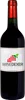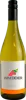
Winery Shed TenChardonnay
 wine
wine
This wine generally goes well with
The Chardonnay of the Winery Shed Ten is in the top 0 of wines of Limestone Coast.
Details and technical informations about Winery Shed Ten's Chardonnay.
Discover the grape variety: Gaglioppo
A very old grape variety cultivated in southern Italy (Sicily, Calabria, etc.), the Greeks and Romans already knew it. It is related to sangiovese and mantonico bianco. According to Pierre Galet, Magliocco is identical to Galioppo.
Informations about the Winery Shed Ten
The Winery Shed Ten is one of of the world's greatest estates. It offers 12 wines for sale in the of Limestone Coast to come and discover on site or to buy online.

The wine region of Limestone Coast
The Limestone Coast GI (Geographical Indication) in SouthAustralia is located in the southeast corner of the state, bordering Victoria in the east. It is one of the most significant region of the country, producing nearly one-third of South Australia's quality wines – some of which are the most highly acclaimed in Australia. The zone is regarded as geologically unique and the feature responsible for producing such high-quality wines is its soil. As the name suggests, limestone forms the basis of the soil here, best represented by the famous 'terra rossa' of Coonawarra.
The wine region of Australie du Sud
SouthAustralia is one of Australia's six states, located (as the name suggests) in the south of the vast island continent. It's the engine room of the Australian wine industry, responsible for about half of the country's total production each year. But there's more to the region than quantity - countless high-quality wines are produced here, most from the region's signature Grape, Shiraz. These include such fine, collectible wines as Penfolds Grange, Henschke Hill of Grace, Torbreck The Laird and d'Arenberg The Dead Arm.
The word of the wine: Muscat blanc à petits grains
A white grape variety cultivated since antiquity on the shores of the Mediterranean, it is considered the noblest of the muscats. It is mainly used to make sweet wines, often from mutage. In France, it is the sole variety used in many natural sweet wines: muscat-de-frontignan, muscat-de-mireval, muscat-de-lunel, muscat-de-saint-jean-de-minervois, muscat-de-beaumes-de-venise, muscat-du-cap-corse. Combined with Muscat d'Alexandrie, it gives Muscat-de-Rivesaltes. It is also used to make sparkling white wines (clairette-de-die; moscato d'asti and asti spumante in Italy) and dry wines (alsace-muscat). Powerfully aromatic and complex, its wines evoke fresh grapes, roses, exotic fruits, citrus fruits and spices.