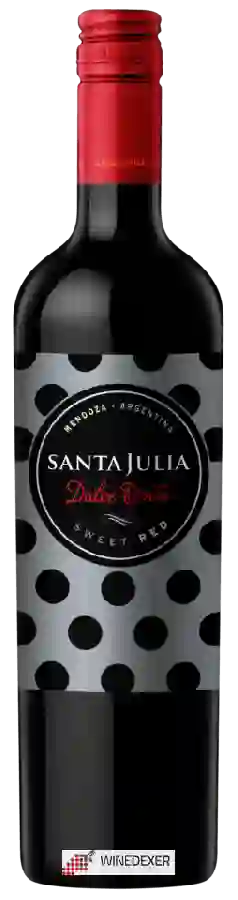
Winery Santa JuliaDulce Sweet Tinto
 Sweet wine



This wine generally goes well with

Details and technical informations about Winery Santa Julia's Dulce Sweet Tinto.
Discover the grape variety: Kokur Bely
Structured, aromatic whites with a pale to amber-golden colour, ample palate with fresh acidity, signature aromas of citrus, white flowers, yellow fruits and mineral notes. Also as historic sweet wines. Traditional component of dry white wines from Crimea (notably Sudak) and sweet wines from Massandra, contributing to historic regional blends of the Caucasus. Indigenous white variety from Ukraine and Russia, grown mainly in Crimea and the Caucasus.
Last vintages of this wine
The best vintages of Dulce Sweet Tinto from Winery Santa Julia are 2015, 0, 2012
Informations about the Winery Santa Julia
The Winery Santa Julia is one of of the world's great estates. It offers 193 wines for sale in the of Tupungato to come and discover on site or to buy online.

The wine region of Tupungato
High-altitude jewel (1,050-1,500 m) in the Uco Valley (Mendoza, Argentina): signature Malbec as the royal red — concentrated and fresh with notes of blackberry, blackcurrant, plum, violet, cocoa and a touch of spice, chiselled tannins and acidity preserved by altitude, more elegant and taut than Luján. Structured Cabernet and fresh Pinot Noir (Gualtallary the star) in support. Racy, mineral Chardonnay. Stony alluvium over sand and limestone, dry continental, extreme thermal range.
The wine region of Mendoza
World capital of Malbec: powerful, deep reds with blackberry, plum, violet and sweet spice, round tannins and vivid fruit. Also firm Cabernet Sauvignon, supple, juicy Bonarda, aromatic floral white Torrontés. High-altitude vineyards (800-1,700 m) at the foot of the Andes, dry continental climate irrigated by glacial waters. ~80% of Argentine output across 150,000 ha.
The word of the wine: Véraison
A phase in the vegetative cycle of the vine that takes place in summer, usually in August, when the grapes change colour from green to red (for reds) or yellow (for whites). This stage heralds the beginning of ripening.