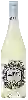
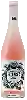
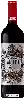
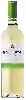
Winery S. Pedro de CardenaCardeña de Misa
 wine
wine
This wine generally goes well with
The Cardeña de Misa of the Winery S. Pedro de Cardena is in the top 0 of wines of Vinos de Pago.
Details and technical informations about Winery S. Pedro de Cardena's Cardeña de Misa.
Discover the grape variety: Canari
The Canary is rarely found in today's vineyards. Its origins are probably in the Pyrenees, precisely in the Ariège. Its repertoire of alternative appellations is vast. Boudalès from the Cévennes becomes folle noire in Fronton. It is also known as chalosse noire, ugne noire or canaril, and can be recognized by its early buds. The very productive vine shows remarkable vigour. Even the black rot does not get the better of this variety. The shoots are covered with foliage, the most exposed parts of which turn red in the autumn. When the grapes reach maturity, which occurs in the second late season, the Canari displays compact, section-shaped bunches of small to medium size. The fins are sometimes very crowded, gathering berries with characteristic colors. The bluish-black shell protects a very juicy flesh. A rather lightly coloured and ordinary wine emerges from the vinification of this variety.
Informations about the Winery S. Pedro de Cardena
The Winery S. Pedro de Cardena is one of of the world's greatest estates. It offers 2 wines for sale in the of Vinos de Pago to come and discover on site or to buy online.

The wine region of Vinos de Pago
Vinos de Pago, often abbreviated to VP, is a relatively New category of wine classification in Spain. It was introduced in 2003, to cover individual wineries whose wines fell outside the existing DO system (geographically or stylistically) but were nevertheless of consistently high quality. As of 2017, there were more than a dozen VPs, all of which are notable exceptions in regions not generally associated with high quality wines. More than half are in Castilla-La Mancha, and the rest in Navarra and Utiel-Requena.
The word of the wine: Chaptalization
The addition of sugar at the time of fermentation of the must, an ancient practice, but theorized by Jean-Antoine Chaptal at the dawn of the 19th century. The sugar is transformed into alcohol and allows the natural degree of the wine to be raised in a weak or cold year, or - more questionably - when the winegrower has a harvest that is too large to obtain good maturity.