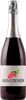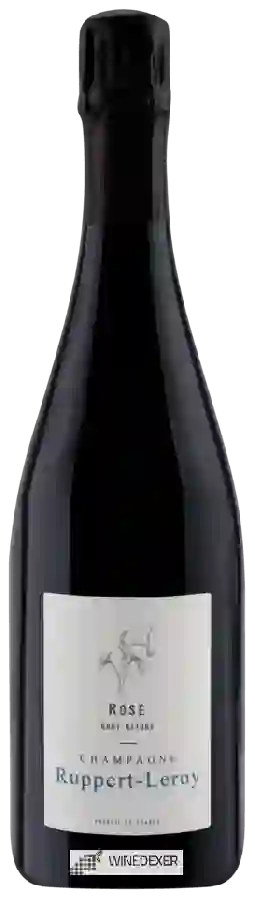
Winery Ruppert-LeroyBrut Nature Rosé Champagne
 Sparkling wine


In the mouth this sparkling wine is a powerful with a nice vivacity and a fine and pleasant bubble.
This wine generally goes well with pork, rich fish (salmon, tuna etc) or shellfish.

Taste structure of the Brut Nature Rosé Champagne from the Winery Ruppert-Leroy
Light | Bold | |
Soft | Acidic | |
Gentle | Fizzy |
In the mouth the Brut Nature Rosé Champagne of Winery Ruppert-Leroy in the region of Champagne is a powerful with a nice vivacity and a fine and pleasant bubble.
Wine flavors and olphactive analysis

Food and wine pairings with Brut Nature Rosé Champagne
Pairings that work perfectly with Brut Nature Rosé Champagne



Original food and wine pairings with Brut Nature Rosé Champagne

The Brut Nature Rosé Champagne of Winery Ruppert-Leroy matches generally quite well with dishes of pork, rich fish (salmon, tuna etc) or shellfish such as recipes of delicious marinated pork chops, baked whole salmon or cuttlefish rust.
Details and technical informations about Winery Ruppert-Leroy's Brut Nature Rosé Champagne.
Discover the grape variety: Pinot noir
Elegant reds, light in colour with silky tannins, showing strawberry, cherry and raspberry aromas, evolving to forest floor, mushroom and spice with age. Fresh acidity, delicate finish. Star of the Côte d'Or (Romanée-Conti, Chambertin, Volnay), pillar of Champagne (Blanc de Noirs) and signature of Oregon, Central Otago and Sonoma Coast. An early-ripening Burgundian variety, one of the world's greatest.
Last vintages of this wine
The best vintages of Brut Nature Rosé Champagne from Winery Ruppert-Leroy are 2014
Informations about the Winery Ruppert-Leroy
The Winery Ruppert-Leroy is one of of the world's greatest estates. It offers 12 wines for sale in the of Champagne to come and discover on site or to buy online.

The wine region of Champagne
World benchmark sparkling wines: fine bubbles, citrusy tension, notes of brioche, toasted almond, white flowers and white-fleshed fruits after ageing on lees. Three grapes blended or solo: fleshy Pinot Noir (38%), fruity Meunier (33%), chiselled Chardonnay (28%). From straight Blanc de Blancs to vinous Blanc de Noirs, from non-vintage Brut to age-worthy Millésimé. AOC since 1927, 34,300 ha on chalk, 17 Grands Crus and 44 Premiers Crus.
The word of the wine: Table wine
Everything that is not VQPRD (European designation for all appellation wines: quality wine produced in a specific region). In principle, the bottom of the ladder. But, as in Italy a decade ago (Vino da Tavola), this category is also a refuge for wines that are out of the ordinary, whose producers refuse to accept certain grape variety or vinification dictates.