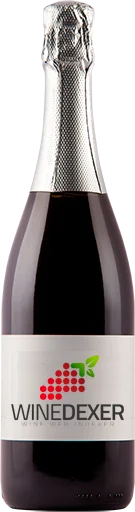
Winery RömerJahrgangssekt Trocken
 Sparkling wine


This wine generally goes well with
Details and technical informations about Winery Römer's Jahrgangssekt Trocken.
Discover the grape variety: Seyval blanc
A relative of the Saint Pepin, this direct-producing hybrid is the result of an interspecific cross between 5656 Seibel and Ray d'Or (4986 Seibel) obtained in 1921 by the Seyve-Villard company, formerly based in Saint Vallier (Drôme). Seyval blanc is registered in the official catalogue of wine grape varieties, list A. It can be found in the United States, Canada, Brazil, Australia, South Africa, Great Britain, the Netherlands, Germany, Romania, Switzerland, etc. It is practically non-existent in France and is in danger of disappearing.
Last vintages of this wine
The best vintages of Jahrgangssekt Trocken from Winery Römer are 0
Informations about the Winery Römer
The Winery Römer is one of of the world's greatest estates. It offers 7 wines for sale in the of Mosel to come and discover on site or to buy online.

The wine region of Mosel
Mosel is the most famous of Germany's 13 official wine regions, and also the third largest in terms of production. As with many German regions, it is most aasociated with a range of wine styles made from the Riesling grape variety, but Müller-Thurgau is also widely planted. The best Mosel Riesling wines are some of the finest whites in the world. Light and low in Alcohol, they can be intensely fragrant with beguiling Floral">floral and Mineral notes, and a wonderful Balance of sweetness and Acidity.
The word of the wine: Tanin
A natural compound contained in the skin of the grape, the seed or the woody part of the bunch, the stalk. The maceration of red wines allows the extraction of tannins, which give the texture, the solidity and also the mellowness when the tannins are "ripe". The winemaker seeks above all to extract the tannins from the skin, the ripest and most noble. The tannins of the seed or stalk, which are "greener", especially in average years, give the wine hardness and astringency. The wines of Bordeaux (based on Cabernet and Merlot) are full of tannins, those of Burgundy much less so, with Pinot Noir containing little.