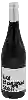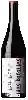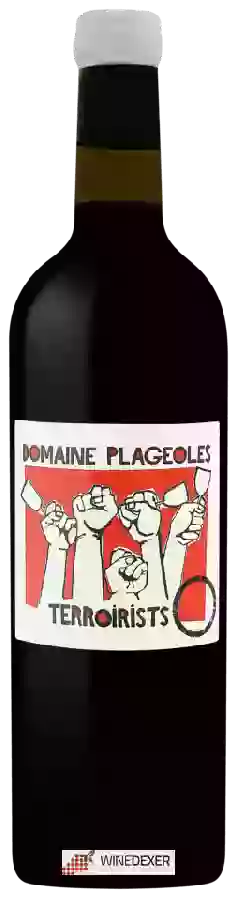
Winery Robert & Bernard PlageolesTerroirists
 Red wine


This wine generally goes well with
The Terroirists of the Winery Robert & Bernard Plageoles is in the top 20 of wines of Vin de France.
Wine flavors and olphactive analysis



On the nose the Terroirists of Winery Robert & Bernard Plageoles in the region of Vin de France often reveals types of flavors of spices, red fruit.
Details and technical informations about Winery Robert & Bernard Plageoles's Terroirists.
Discover the grape variety: Scarlotta seedless
Intraspecific cross between sun world.seedling 89345-090-144 and sun world seedling 89361-091-364 obtained in California (USA) by Cain David Wayne from Sun World International Inc. Not known in France, we can meet it in England, in Spain, in Chile, ... . It should be of interest to amateur gardeners.
Last vintages of this wine
The best vintages of Terroirists from Winery Robert & Bernard Plageoles are 0
Informations about the Winery Robert & Bernard Plageoles
The Winery Robert & Bernard Plageoles is one of of the world's greatest estates. It offers 25 wines for sale in the of Vin de France to come and discover on site or to buy online.

The wine region of Vin de France
Vin de France is the most basic level of quality for wines from France. These are generally uncomplicated everyday drinks - most often blends, but perhaps also Varietal wines based on a well-known Grape variety such as Cabernet Sauvignon, Merlot, Chardonnay or Sauvignon Blanc. Wines from France are those that do not meet the criteria stipulated by the Protected Designation of Origin (PDO) or Protected Geographical Indication (PGI) laws (see information on French wine labels). This may be because the vineyards are outside the delimited production areas or because the grape varieties or winemaking techniques used do not conform to the rules of the local appellations.
The word of the wine: Oxidative (breeding)
A method of ageing which aims to give the wine certain aromas of evolution (dried fruit, bitter orange, coffee, rancio, etc.) by exposing it to the air; it is then matured either in barrels, demi-muids or unoaked casks, sometimes stored in the open air, or in barrels exposed to the sun and to temperature variations. This type of maturation characterizes certain natural sweet wines, ports and other liqueur wines.