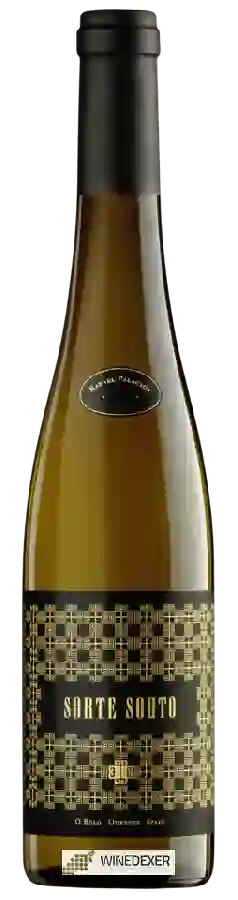
Winery Rafael PalaciosSorte Souto
 wine
wine
This wine generally goes well with
The Sorte Souto of the Winery Rafael Palacios is in the top 0 of wines of Valdeorras.
Details and technical informations about Winery Rafael Palacios's Sorte Souto.
Discover the grape variety: Picolit blanc
A very old grape variety, probably already known to the Romans, and most certainly of Italian origin, from Friuli to be precise. The Hungarian Keknyelu is said to be the same variety, but this remains to be confirmed. It is almost unknown in France and even in the wine world, perhaps because of its low production and its sensitivity to various diseases. It should be noted that it is not related to the black picolit.
Last vintages of this wine


The best vintages of Sorte Souto from Winery Rafael Palacios are 0
Informations about the Winery Rafael Palacios
The Winery Rafael Palacios is one of of the world's greatest estates. It offers 8 wines for sale in the of Valdeorras to come and discover on site or to buy online.

The wine region of Valdeorras
The wine region of Valdeorras is located in the region of Galice of Spain. Wineries and vineyards like the Domaine Rafael Palacios or the Domaine Rafael Palacios produce mainly wines white, red and sweet. The most planted grape varieties in the region of Valdeorras are Mencia, Albarino and Trousseau, they are then used in wines in blends or as a single variety. On the nose of Valdeorras often reveals types of flavors of pineapple, mango or slate and sometimes also flavors of black fruit, red fruit or watermelon.
The wine region of Galice
Galicia is one of the 17 first-level administrative regions (called comunidades autónomas) of Spain. It occupies the northwestern corner of the Iberian Peninsula, and is exposed on two sides to the Atlantic Ocean. To the South is Portugal, to the east Castilla y Leon. Viticulture has a Long tradition in Galicia, introduced to the region by the ancient Romans and continued by monks throughout the Middle Ages.
The word of the wine: Disgorging (champagne)
This is the evacuation of the deposit formed by the yeasts during the second fermentation in the bottle, by opening the bottle. The missing volume is completed with the liqueur de dosage - a mixture of wine and cane sugar - before the final cork is placed. For some years now, some producers have been replacing this sugar with rectified concentrated musts (concentrated grape juice) which give excellent results. A too recent dosage (less than three months) harms the gustatory harmony of the champagne.