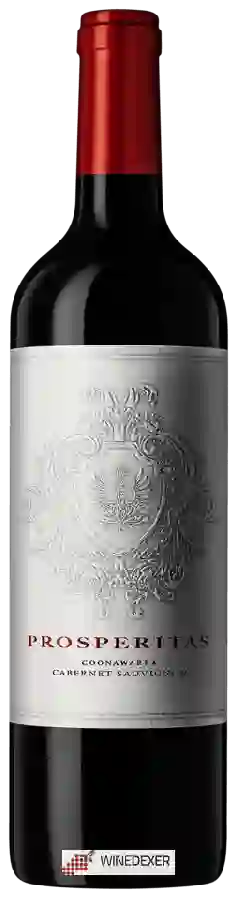
Winery Prosperitas WinesCabernet Sauvignon
 wine
wine
This wine generally goes well with
The Cabernet Sauvignon of the Winery Prosperitas Wines is in the top 0 of wines of Coonawarra.

Details and technical informations about Winery Prosperitas Wines's Cabernet Sauvignon.
Discover the grape variety: Muscat bleu
Aromatic and fruity reds with a deep ruby colour, soft tannins and a light palate with preserved acidity, featuring signature muscat aromas (rose, fresh grape), red fruits and flowers. Early ripening and disease resistant. Grown mainly in Switzerland, Germany and the United Kingdom in northern and amateur vineyards, producing original muscat-style red wines. Swiss black hybrid variety obtained in 1932 by complex crossing.
Informations about the Winery Prosperitas Wines
The Winery Prosperitas Wines is one of of the world's greatest estates. It offers 8 wines for sale in the of Coonawarra to come and discover on site or to buy online.

The wine region of Coonawarra
Australian icon of Cabernet Sauvignon on the legendary terra rossa (Limestone Coast, south-east): signature king red — elegant and structured with notes of bright blackcurrant, blackberry, cedar, pencil shavings and a minty touch, vibrant acidity and chiselled tannins, great ageing. Tasty Shiraz and supple Merlot complete it. A narrow strip (12 km × 1 km) of rust-red loam over active limestone, Antarctic coolness and ocean upwelling, moderate alcohols and exceptional freshness.
The wine region of Australie du Sud
Cradle of the great Australian Shiraz: powerful, sun-drenched reds with notes of blackberry, candied plum, pepper, chocolate and eucalyptus, ample tannins and vibrant fruit (Barossa, McLaren Vale). Firm, minty Cabernet Sauvignon on Coonawarra (terra rossa). Dry, lemony Riesling from Clare and Eden Valley, straight and taut. Fresh Sauvignon and Chardonnay from Adelaide Hills.
The word of the wine: Hairy
A sensual and complete wine that leaves a sensation of balance and fullness in the mouth.







