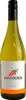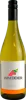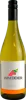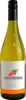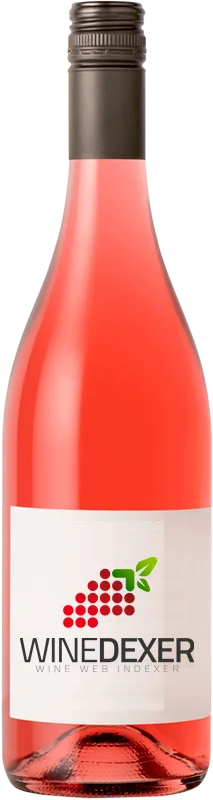
Caves de Pouilly-Sur-LoireCoteaux du Giennois Rosé
 Pink wine
This wine generally goes well with
Details and technical informations about Caves de Pouilly-Sur-Loire's Coteaux du Giennois Rosé.
Discover the grape variety: Barlinka
- Origin : Very well known in South Africa, it was imported into this country in 1910 from Algeria and then mainly cultivated as a table grape... attempts at vinification were made but without success. It is also known in Portugal, ... in France it is almost unknown.
Informations about the Caves de Pouilly-Sur-Loire
The Caves de Pouilly-Sur-Loire is one of of the world's great estates. It offers 47 wines for sale in the of Coteaux du Giennois to come and discover on site or to buy online.

The wine region of Coteaux du Giennois
The Coteaux-du-Giennois AOC is located in the Centre-Loire sub-region. The 200 hectare VineyardLies on two distinct soils separated by the "Cosne fault". To the North, the soils are composed of clay, silica and sometimes limestone, they are located in the area from Briare to Gien. To the South, the vineyards are located on white earth and clots, with siliceous deposits in places.
The wine region of Loire Valley
The Loire Valley is a key wine region in western France. It follows the course of the Loire River on its Long journey through the heart of France, from the inland hills of the Auvergne to the plains of the French Atlantic coast near Nantes (Muscadet country). Important in terms of quantity and quality, the region produces large quantities (about 4 million h/l each year) of everyday wines, as well as some of France's greatest wines. Diversity is another of the region's major assets; the styles of wine produced here range from the light, tangy Muscadet to the Sweet, honeyed Bonnezeaux, the Sparkling whites of Vouvray and the juicy, Tannic reds of Chinon and Saumur.
The word of the wine: Bâtonnage
A very old technique that has come back into fashion in modern oenology, which consists of shaking the white wine in the barrels at the end of fermentation, or after fermentation, with a stick or a flail, in order to suspend the fine lees composed of yeasts at the end of their activity. This process is sometimes used for red wines.