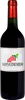
Winery Poacher's RidgeLouis Block Merlot
 wine
wine
This wine generally goes well with
The Louis Block Merlot of the Winery Poacher's Ridge is in the top 0 of wines of South West Australia.
Details and technical informations about Winery Poacher's Ridge's Louis Block Merlot.
Discover the grape variety: Bargine
This grape variety was formerly cultivated in the Jura and is said to have made the reputation of the Château-Châlon appellation. Today, it is no longer present in the vineyard.
Informations about the Winery Poacher's Ridge
The Winery Poacher's Ridge is one of of the world's great estates. It offers 18 wines for sale in the of South West Australia to come and discover on site or to buy online.

The wine region of South West Australia
Western Australia is the largest of the eight administrative zones and territories of Australia. In 2020, it represented just two percent of the national wine production, but has previosly occupied up to 20 percent of the nation's fine wines. Covering the entire western third of the vast island continent, "WA" (as it is commonly called) spans 1,600 kilometers (1,000 miles) from east to west. This makes it the second-largest administrative subdivision of any country in the world – bigger than Alaska and Texas combined.
The wine region of Australie de l'Ouest
Western Australia is the largest of Australia's eight administrative areas and territories. In 2020, it accounted for only 2% of the nation's wine production, but has already produced up to 20% of the country's fine wines. Covering the entire western third of the vast island-continent, "WA" (as it is commonly known) stretches 1,600 kilometres (1,000 miles) from east to west. This makes it the second largest administrative subdivision of any country in the world, larger than Alaska and Texas combined.
The word of the wine: Performance
Quantity of grapes harvested per hectare. In AOC, the average yield is limited on the proposal of the appellation syndicate, validated by the Inao. The use of high-performance plant material (especially clones) and better control of vine diseases have increased yields. This is not without consequences on the quality of the wines (dilution) and on the state of the market (too much wine). We must not over-simplify: low yields are not synonymous with quality, and it is often in years with generous harvests that we find the greatest vintages (1982 and 1986 in Bordeaux, 1996 in Champagne, 1990 and 2005 in Burgundy...).