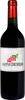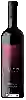
Winery PiquentumZweigelt im Fluss
 Red wine


This wine generally goes well with blue cheese, pork or lamb.
Food and wine pairings with Zweigelt im Fluss
Pairings that work perfectly with Zweigelt im Fluss



Original food and wine pairings with Zweigelt im Fluss

The Zweigelt im Fluss of Winery Piquentum matches generally quite well with dishes of lamb, pork or mature and hard cheese such as recipes of lamb and coconut curry, african style, oven roasted rabbit that cooks itself! or chicken puff pastry.
Details and technical informations about Winery Piquentum's Zweigelt im Fluss.
Discover the grape variety: Zweigelt
Intraspecific crossing between the saint laurent and the limberger realized in 1922 and in Austria by Fritz Zweigelt (1888/1964) who named it rotburger. Very well known in Austria, it can be found in most Eastern countries, Japan, Germany, Great Britain, the Netherlands, Belgium, Switzerland, Italy, Canada, the United States, etc. In France, it is not very well known and yet this variety has interesting qualities when vinified as a single variety for both red and rosé wines. - Synonyms: rotburger, klosterneuburger, zweigelt blau, blauer-zweigelt in Germany, zweigeltrebe in Austria, Great Britain and the Czech Republic, blauer zwelgetrabe in Hungary, etc. (for all the synonyms of the grape varieties, click here !)
Last vintages of this wine
The best vintages of Zweigelt im Fluss from Winery Piquentum are 0, 2018
Informations about the Winery Piquentum
The Winery Piquentum is one of of the world's greatest estates. It offers 8 wines for sale in the of Istra to come and discover on site or to buy online.

The wine region of Istra
The wine region of Istra of Croatia. Wineries and vineyards like the Domaine Meneghetti or the Domaine Medea produce mainly wines white, red and sweet. The most planted grape varieties in the region of Istra are Terrano, Merlot and Cabernet-Sauvignon, they are then used in wines in blends or as a single variety. On the nose of Istra often reveals types of flavors of pineapple, quince or hay and sometimes also flavors of grass, honeysuckle or truffle.
The word of the wine: Hat
Solid part (marc), composed of pips and skins (sometimes of the stalk), which forms at the top of the tank during fermentation. The pigeage consists in breaking this cap to put back in suspension these elements and to favour the exchanges between the juice and the skins.